NIPT & Harmony Testing in London

We combine advanced NIPT for Down’s syndrome and chromosomal conditions with our expert ultrasound scan to check your baby’s health as early as possible. Results in 2-4 working days (PrenatalSAFE)

Our expert scan & NIPT tests in London are currently the most competitive with prices starting from £490. That includes TDL VeriSeq V2, the successor to Harmony from the same London laboratory.

Available atLPC City (E1)LPC West (SW10)

Harmony Test used to be the Gold Standard in NIPT…

Introduced in 2013, it quickly became popular among UK healthcare providers. In recent years, Harmony has lagged versus other NIPT technologically. This has resulted in TDL – the lab providing the test discontinuing the test across the UK.

TDL — The Doctors Laboratory — was the UK provider of the Harmony test. TDL now runs the Illumina VeriSeq NIPT Solution v2 assay, which we offer as TDL VeriSeq V2: the same London laboratory Harmony patients used, on a modern platform, with results in 2-4 working days.

If you came to this page looking for Harmony, TDL VeriSeq V2 is its natural successor. It screens for trisomy 21 (Down's syndrome), trisomy 18 (Edwards' syndrome) and trisomy 13 (Patau's syndrome), with optional fetal sex determination, and costs £540 with our ultrasound scan — the same price as PrenatalSAFE NIPT. It does not screen for microdeletions, 22q/DiGeorge or single-gene conditions; for those, see extended NIPT in London.

We have some good news for you, we audited the most advanced NIPT in the market, and are able to offer a menu of test for and help you make the choice suitable for YOUR pregnancy. Read more about our NIPT choices, or book today for our clinicians to help you make the best informed choice.

Prefer to weigh everything up first? Compare the options side by side in our best NIPT test in London comparison, check what each test costs in our NIPT cost guide, or book NIPT genetic counselling to talk it through with a specialist. A full like-for-like map of replacements is in our Harmony test alternatives guide.

We recommend booking NIPT along with our revolutionary 10 Week Scan for a 360 view of your baby’s health. Our NIPT can be done at any stage of pregnancy from 9 weeks.

Harmony NIPT Scan
NIPT at London Pregnancy Clinic

Harmony Test Announcement

A graphic by London Pregnancy Clinic announcing information about Harmony® NIPT with an illustrated background featuring medical office elements.
Harmony Test Announcement
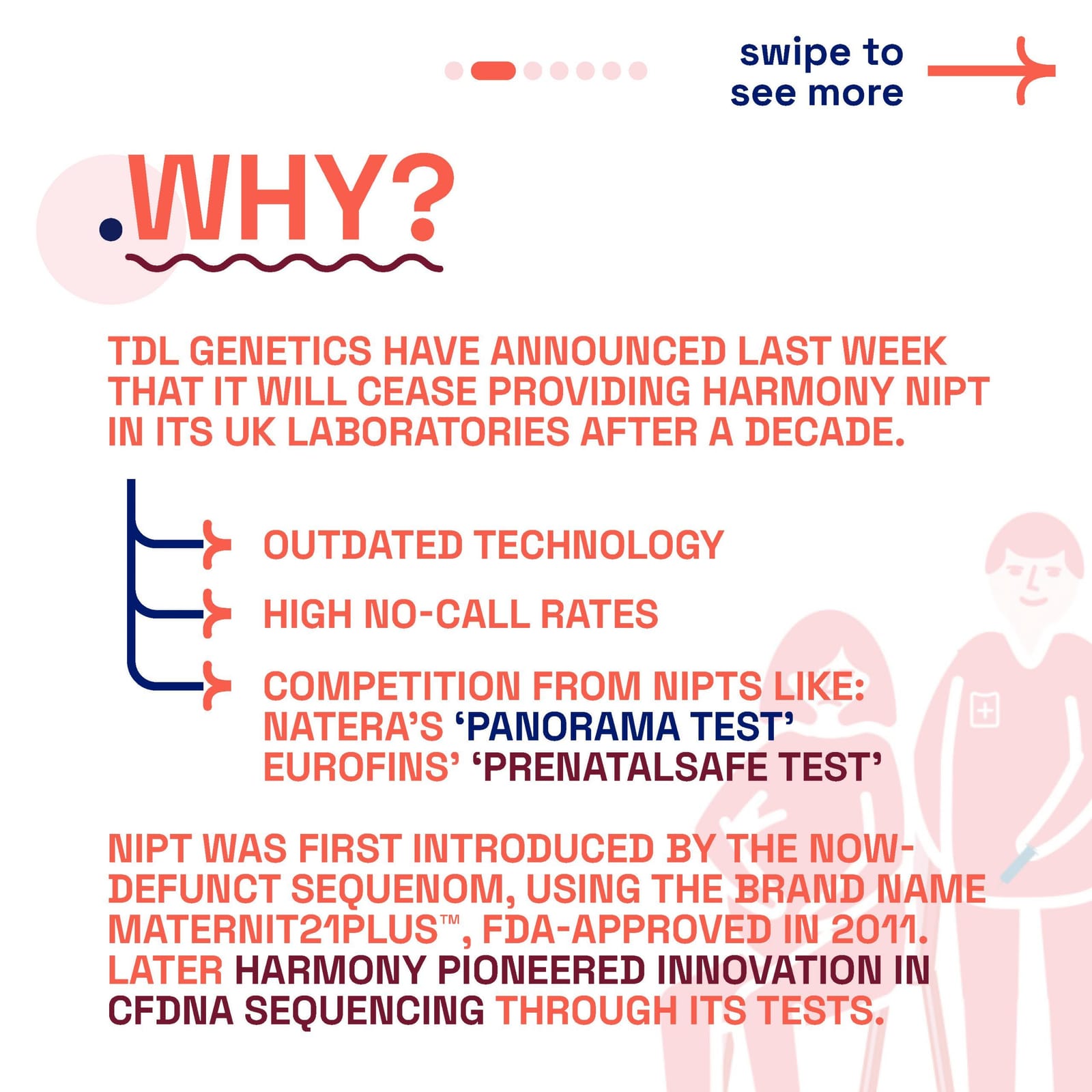
London Pregnancy Clinic's explanation for discontinuing Harmony NIPT due to outdated technology and competition, with a brief history of NIPT's development.
Why Harmony NIPT is Discontinued
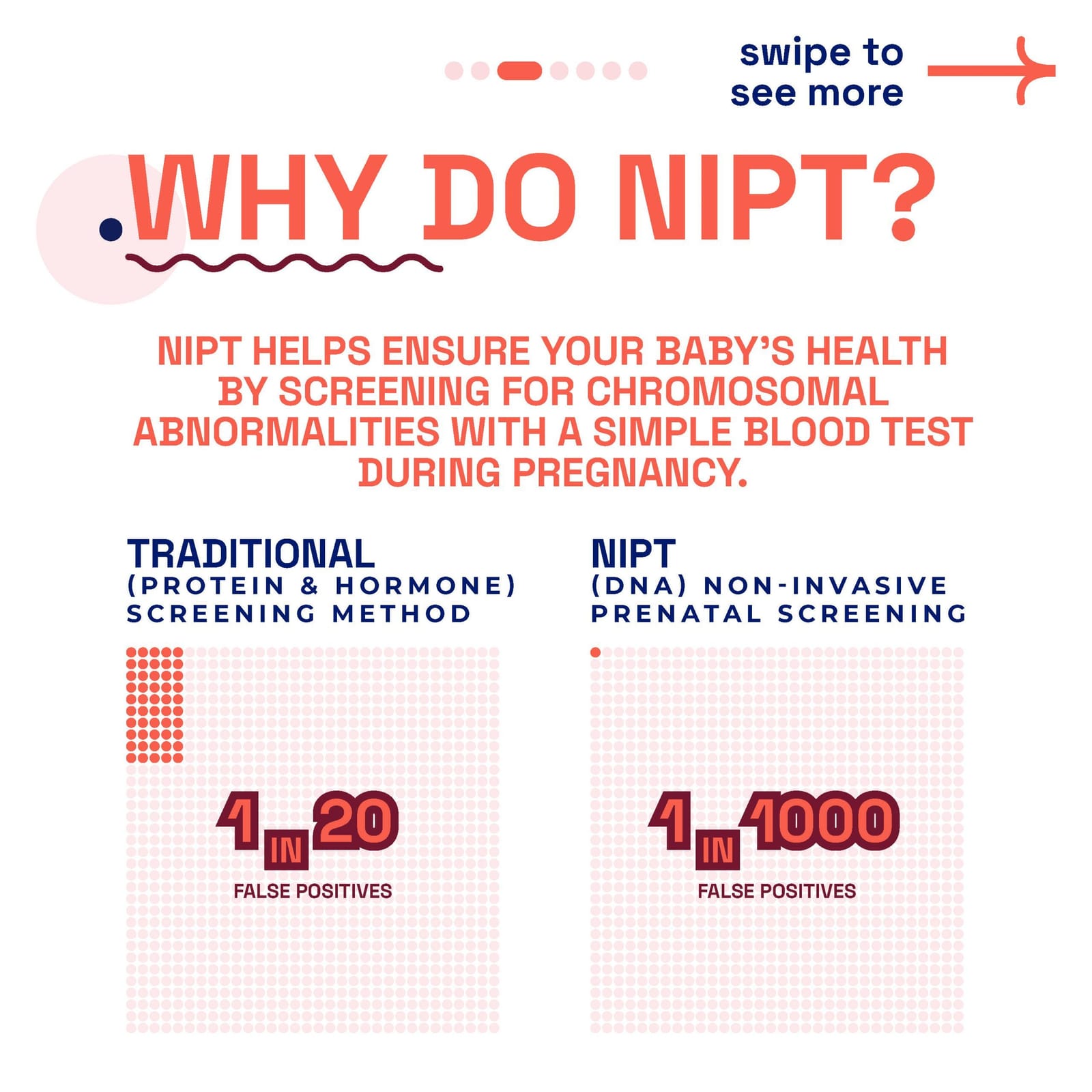
Informational image by London Pregnancy Clinic showing the advantages of NIPT over traditional screening methods with statistics on false positives.
Benefits of NIPT over traditional screening
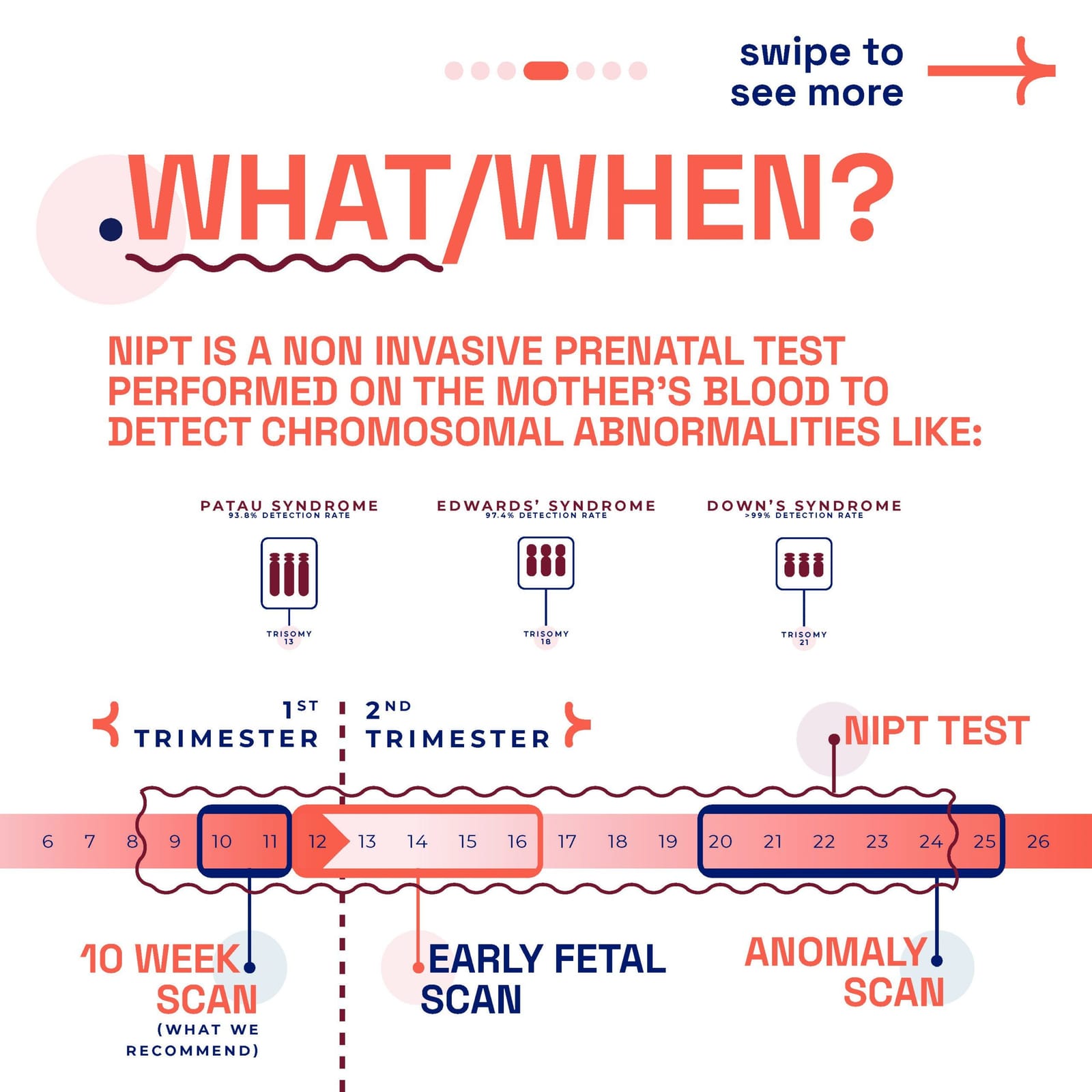
Educational infographic by London Pregnancy Clinic about NIPT, explaining what it is and the optimal timing for the test during pregnancy to detect chromosomal abnormalities.
What and When of NIPT
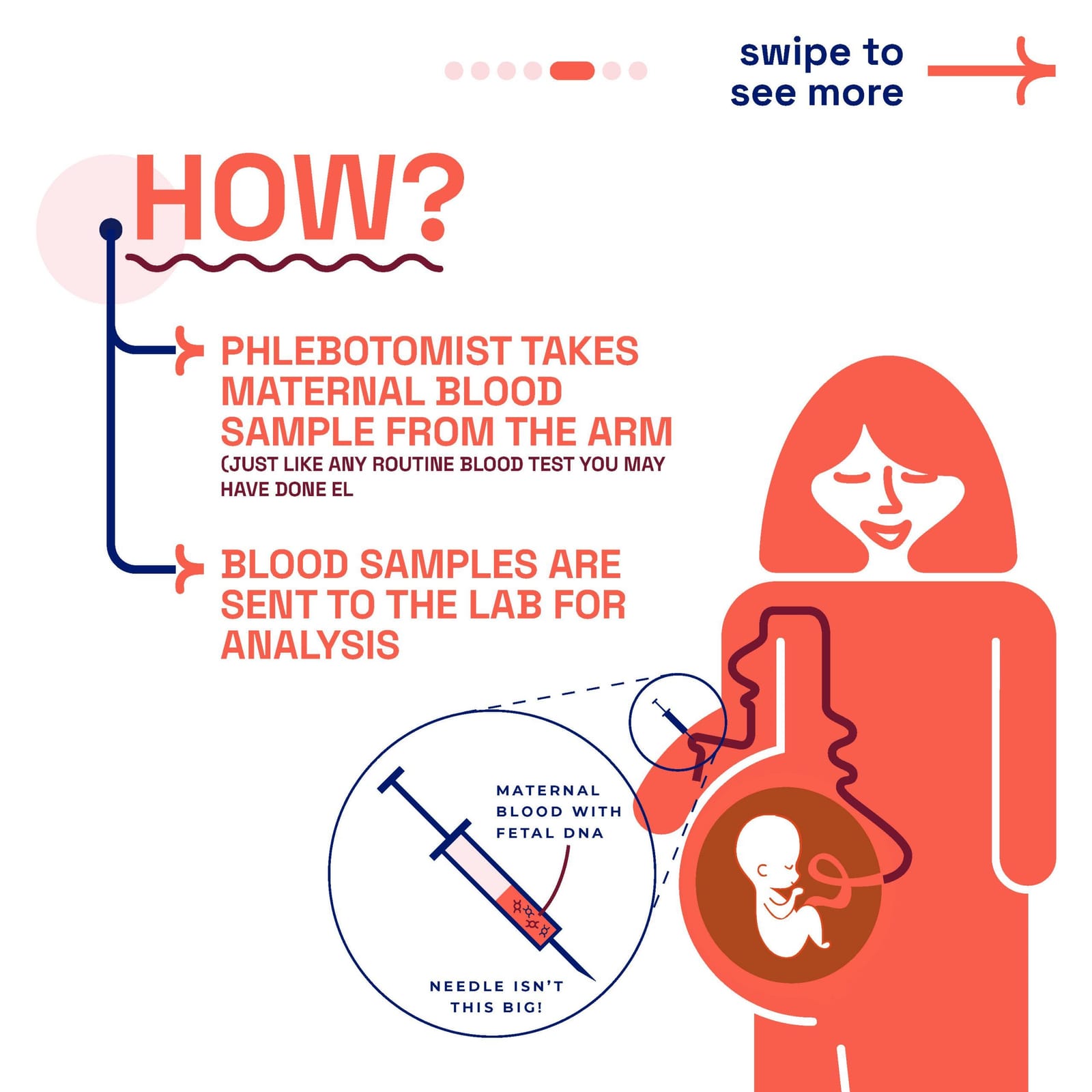
Illustrative guide by London Pregnancy Clinic on how NIPT is performed, showing a phlebotomist taking a blood sample and the process of lab analysis for fetal DNA.
How NIPT Works — from blood sample to result
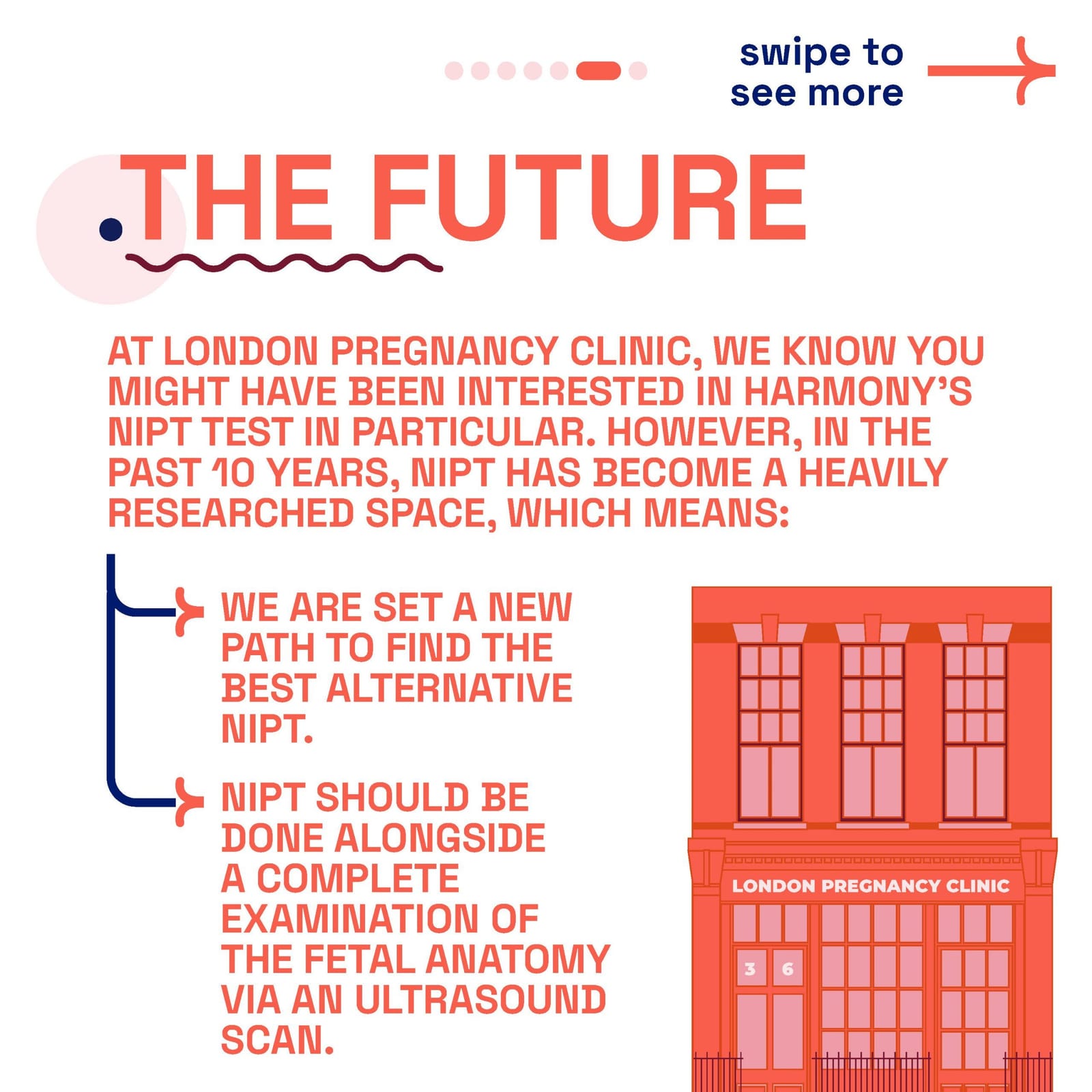
London Pregnancy Clinic's image discussing the future of NIPT tests and the clinic's approach to finding the best alternatives alongside a complete fetal anatomy examination.
The Future of NIPT

NIPT at London Pregnancy Clinic

  • Most accurate Down’s syndrome screening test currently available
  • Advanced structural and chromosomal screening tests from 10 weeks: at least 3 chromosomal conditions (by NIPT) + at least 10 severe structural anomalies (by scan)
  • Choose between a Panorama NIPT £590 (from 9 weeks) and a PrenatalSAFE £540 or Unity NIPT £490 (10 weeks)
  • PrenatalSAFE NIPT available for £540 – most advanced test 2-4 working days turnaround on the market with additional screening options
  • Extended NIPT option available with screening for rare diseases and microdeletions (tiny missing pieces of a chromosome)
  • Scans and NIPT appointment with our fetal medicine specialists with extensive NHS and international experience.
  • Same day, evening, and weekend appointments
  • Optional gender reveal included in the price
  • Latest 3D/4D ultrasound technology
  • 5* rated service on Google, Trustpilot & Doctify
  • Scan report, videos and images sent straight to your smartphone

NIPT Testing Explained

Harmony NIPT was for 10 years the go-to test for many clinicians in the UK. In recent years the test lost its shine and very often resulted in failed tests and tubes causing significant delays and anxiety for patients.

As the leading private NIPT provider in London, our medical team has identified this issue with Harmony NIPT in 2021, 2 years before TDL announced Harmony NIPT would be discontinued on 13/09/2023. We set out to find the best alternative, and were very impressed by the technological advancements in some NIPT providers. We found tests which are superior to Harmony from 3 main providers, Panorama Test, PrenatalSAFE and Unity NIPT.

Read more in our Blog post on the discontinuation of Harmony NIPT in the UK.

01

What NIPT screens for

Non-invasive prenatal screening is an advanced screening test predominantly for 3 chromosomal anomalies:

These are approximate published cell-free DNA detection rates; the Harmony test itself has been discontinued in the UK, and we now offer more advanced NIPT with comparable or better performance.

NIPT is a screening test, not a diagnostic one: any high-chance result must be confirmed by a diagnostic test such as CVS or amniocentesis. It is highly accurate, with false positive rates <0.1% for all 3 trisomies. Detection and false positive rates are calculated at a risk cut-off of 1/100. The test can also detect the fetal sex with >99% accuracy.

  • Down’s Syndrome (Trisomy 21 – >99% detection rate)
  • Edward’s Syndrome (Trisomy 18 – >97% detection rate)
  • Patau’s Syndrome (Trisomy 13 – >90% detection rate)
02

Why 10 weeks is the best time

10 weeks is the best time for your NIPT because:

  • You prefer to be reassured regarding Down’s syndrome as early as possible
  • We perform your earliest fetal structural anomaly scan at 10 weeks which will exclude severe not-chromosomal defects
  • In case of no-call NIPT results of the test you have plenty of time to to retake the test and have alternative screening for Down’s syndrome by Combined Test
  • In case of high-chance NIPT results you can perform CVS (invasive test) to confirm or exclude the chromosomal problem at earliest possibility (usually at 11-12 weeks).
  • In case of an abnormal finding in our 10 Week Scan, we will assist you in an urgent referral to Fetal Medicine Unit without wasting your time or money for inappropriate NIPT. It is well-recognised that NIPT is unsuitable test in the case of structural fetal anomaly
  • It is possible to perform Panorama Test from 9 weeks, however in this case structural assessment of the baby can be limited
03

Harmony vs Panorama AI

‘Harmony test‘ is a brand name for Roche’s NIPT. The test was developed by start-up Ariosa (US) more than 10 years ago. Currently the analysis is performed in London by TDL Genetics.

‘Panorama AI’ is a test developed by Natera (US), a pioneer in the field. New upgraded Panorama AI algorithm uses a combination of artificial intelligence (AI) with Natera’s proprietary genetic methodology to improve both accuracy and the positive predictive value for an extended range of genetic conditions.

Please find a comparison table between the tests below.

04

How the appointment works

Our fetal medicine doctor will initially conduct an anatomical examination of the baby to check for structural anomalies and take some measurements for the NIPT test.

Once the clinician is satisfied with the baby’s normal structural examination, they will proceed with a consultation about NIPT to answer your questions about every aspect of the test.

Finally, our friendly phlebotomist will take the mother’s blood sample from the arm – just like any routine blood test you may have done elsewhere.

Our staff then process the maternal blood samples and will send them to the lab soon after your appointment. Now all there’s left to do is to wait for a call from us!

05

Why scan with NIPT

Ultrasound is a vital part of fetal screening. The laboratory requires a confirmation of viability and gestational age by the clinic submitting each NIPT

NIPT is a highly effective screening test for 3 chromosomal anomalies plus some other genetic conditions (panorama only), however it is unable to screen for structural anomalies such as heart or brain defects which are more common and often more serious than Down’s syndrome.

Here at London Pregnancy Clinic, we specialise in early detection of fetal anomalies, the fetal heart and the fetal brain. We can detect some severe fetal anomalies as early as at 10 weeks. Visit our scans page to find out which scan you will be having along with NIPT. Generally, we believe that our 10-week scan is the best option.

If you choose to have a panorama test at 9 weeks, we will also perform an expert structural scan for your baby (embryo), however this scan will be understandably limited due to small size and developmental immaturity of the baby.

06

Structural anomalies we screen for

With our expertise and technology, we can screen for structural anomalies from 10 weeks (approximate prevalence in the first trimester):

  • Acrania (1:1,000)
  • Alobar Holoprosencephaly (1:1,300)
  • Spina Bifida (1:2,000)
  • Absence of arms, hands, legs or feet (1:2,000)
  • Encephalocele (1:5,000)
  • Exomphalos (Omphalocele) with liver (1:3,500)
  • Amniotic Band Anomaly (1:7,000)
  • Body Stalk Anomaly (1:7,500)
  • Sirenomelia (1:60,000)
  • Conjoined Twins (1% of monochorionic twins)
07

How prevalence compares

In comparison, the prevalence of the chromosomal conditions screened for by NIPT:

If you take the test at 12+ weeks we are able to screen by ultrasound for >100 structural fetal anomalies, however we may lose few advantages of early NIPT.

  • Down’s Syndrome (1:331)
  • Edward’s Syndrome (1:1,152)
  • Patau’s Syndrome (1:2,911)
08

The future of NIPT in the UK

The Doctor’s Laboratory (TDL Genetics) has now opted to work with Illumina’s NIPT technology. This is a very standard technology which is now used by many NIPT providers. Most notable, PrenatalSAFE – EuroFins’ NIPT offering has been utilising this technology for years.

We offer that same Illumina assay as TDL VeriSeq V2 — the natural successor to Harmony for anyone who came looking for it: same London lab, 2-4 working day turnaround, £540 with our scan.

Harmony NIPT Scan

Harmony NIPT Scan in London is required when the blood test is performed

PrenatalSAFE vs TDL VeriSeq V2 vs Harmony — feature comparison

FeaturePrenatalSafeTDL VeriSeq V2Harmony (Discontinued)
PackageBasicBasic—
Price£540£540Discontinued
When>10 weeksas early as 10 weeks>10 weeks
Turnaround time2–4 working days2-4 working days3–5 working days
Laboratory LocationUKUKLondon, UK
No Call Results0.5%——
Fetal Fraction CutoffN/A—4%
Down’s Syndrome (T21)Yes (>99% accuracy)YesYes (>99% accuracy)
Edward Syndrome (T18)Yes (>99% accuracy)YesYes (>97% accuracy)
Patau Syndrome (T13)Yes (>99% accuracy)YesYes (>90% accuracy)
Di George Syndrome (22q del)NoNoNo
Triploidy**NoNoNo
Turner Syndrome (45X)**NoNoYes, optional
Sex Chromosome Aneuploidy**NoNoYes, optional
Microdeletions and single gene disorders***NoNoNo
Optional Gender RevealYes (>99% accuracy)YesYes (>99% accuracy)
Extended NIPTPrenatalSAFE Complete Plus——

Comparison notes

The figures above are the published detection rates for the Harmony NIPT.

The data was taken from the clinical data published by Roche and Eurofins.

None of the tests above screens for Di George syndrome (22q deletion). Panorama AI does: its Di George screening was validated in SMART, the largest prospective NIPT study (Dar et al., 2022), combining artificial intelligence (AI) with Natera’s proprietary SNP-based methodology to improve both accuracy and the positive predictive value (PPV) for 22q deletions. The data from this study showed detection of all cases of the most common 2.5–3 Mb 22q11.2 deletion and 83% of all 22q11.2 deletions, with a 53% positive predictive value (PPV) and just a 0.05% false positive rate.

** Triploidy, Turner syndrome (45X) and sex chromosome aneuploidy NIPT screening has limited clinical validation data. It can have higher false positive rate and also inconclusive results.

*** Panorama Al with Microdeletion Panel add-on options. Please get in touch to enquire.

Your questions answered

Why was Harmony NIPT discontinued in the UK?

Harmony NIPT was for 10 years the go-to test for many clinicians in the UK. In recent years the test lost its shine and very often resulted in failed tests and tubes causing significant delays and anxiety for patients.

As the leading private NIPT provider in London, our medical team has identified this issue with Harmony NIPT in 2021, 2 years before TDL announced Harmony NIPT would be discontinued on 13/09/2023. We set out to find the best alternative, and were very impressed by the technological advancements in some NIPT providers. We found tests which are superior to Harmony from 3 main providers, Panorama Test, PrenatalSAFE and Unity NIPT.

Read more in our Blog post on the discontinuation of Harmony NIPT in the UK.

For a full like-for-like mapping of current options, see our Harmony test alternatives guide.

TDL was the UK provider of the Harmony test, and TDL now runs the Illumina VeriSeq NIPT Solution v2 assay. We offer it as TDL VeriSeq V2 — the same London laboratory, a modern assay, results in 2-4 working days, £540 with our expert scan included.

Is there a direct replacement for the Harmony test?

Yes. TDL — the laboratory that ran Harmony in the UK — now offers the Illumina VeriSeq NIPT Solution v2 assay, which we provide as TDL VeriSeq V2. It is the closest like-for-like replacement: the same London laboratory, the same core screen for trisomy 21, trisomy 18 and trisomy 13 with optional fetal sex determination, and a slightly faster 2-4 working day turnaround.

It costs £540 with our expert ultrasound scan — the same price as PrenatalSAFE NIPT. If you want wider screening, the Panorama test adds 22q and triploidy, and our extended NIPT options go further still. Compare them all in the best NIPT test in London comparison, check prices in our NIPT cost guide, or read the full Harmony test alternatives guide.

Remember that NIPT is a screening test, never a diagnostic one: a higher-chance result needs confirmation by CVS or amniocentesis with karyotype chromosome analysis. Our NIPT genetic counselling service is there if you would like to talk it through, and you can read more about Down’s syndrome (trisomy 21), Edwards’ syndrome and Patau’s syndrome.

What is NIPT (Non-Invasive Prenatal Screening)?

Non-invasive prenatal screening is an advanced screening test predominantly for 3 chromosomal anomalies:

These are the published cell-free DNA detection rates for the Harmony NIPT; the Harmony test itself has been discontinued in the UK, and we now offer more advanced NIPT with comparable or better performance — see TDL VeriSeq V2 and PrenatalSAFE NIPT.

The test is highly accurate with false positive rates <0.1% for all 3 trisomies. Detection and false positive rates are calculated at a risk cut-off of 1/100. The test can also detect the fetal sex with >99% accuracy.

NIPT is a screening test, not a diagnostic one: any high-chance result must be confirmed by a diagnostic test such as CVS or amniocentesis.

  • Down’s Syndrome (Trisomy 21 – >99% detection rate)
  • Edward’s Syndrome (Trisomy 18 – >97% detection rate)
  • Patau’s Syndrome (Trisomy 13 – >90% detection rate)
10 weeks is the best time to perform NIPT

10 weeks is the best time for your NIPT because:

  • You prefer to be reassured regarding Down’s syndrome as early as possible
  • We perform your earliest fetal structural anomaly scan at 10 weeks which will exclude severe not-chromosomal defects
  • In case of no-call NIPT results of the test you have plenty of time to to retake the test and have alternative screening for Down’s syndrome by Combined Test
  • In case of high-chance NIPT results you can perform CVS (invasive test) to confirm or exclude the chromosomal problem at earliest possibility (usually at 11-12 weeks).
  • In case of an abnormal finding in our 10 Week Scan, we will assist you in an urgent referral to Fetal Medicine Unit without wasting your time or money for inappropriate NIPT. It is well-recognised that NIPT is unsuitable test in the case of structural fetal anomaly
  • It is possible to perform Panorama Test from 9 weeks, however in this case structural assessment of the baby can be limited
Tests available at London Pregnancy Clinic

‘Harmony test‘ is a brand name for Roche’s NIPT. The test was developed by start-up Ariosa (US) more than 10 years ago. Currently the analysis is performed in London by TDL Genetics.

‘Panorama AI’ is a test developed by Natera (US), a pioneer in the field. New upgraded Panorama AI algorithm uses a combination of artificial intelligence (AI) with Natera’s proprietary genetic methodology to improve both accuracy and the positive predictive value for an extended range of genetic conditions.

Please find a comparison table between the tests below.

How is the test performed?

Our fetal medicine doctor will initially conduct an anatomical examination of the baby to check for structural anomalies and take some measurements for the NIPT test.

Once the clinician is satisfied with the baby’s normal structural examination, they will proceed with a consultation about NIPT to answer your questions about every aspect of the test.

Finally, our friendly phlebotomist will take the mother’s blood sample from the arm – just like any routine blood test you may have done elsewhere.

Our staff then process the maternal blood samples and will send them to the lab soon after your appointment. Now all there’s left to do is to wait for a call from us!

Why do I need to have an ultrasound scan with NIPT?

Ultrasound is a vital part of fetal screening. The laboratory requires a confirmation of viability and gestational age by the clinic submitting each NIPT

NIPT is a highly effective screening test for 3 chromosomal anomalies plus some other genetic conditions (panorama only), however it is unable to screen for structural anomalies such as heart or brain defects which are more common and often more serious than Down’s syndrome.

Here at London Pregnancy Clinic, we specialise in early detection of fetal anomalies, the fetal heart and the fetal brain. We can detect some severe fetal anomalies as early as at 10 weeks. Visit our scans page to find out which scan you will be having along with NIPT. Generally, we believe that our 10-week scan is the best option.

If you choose to have a panorama test at 9 weeks, we will also perform an expert structural scan for your baby (embryo), however this scan will be understandably limited due to small size and developmental immaturity of the baby.

10 Structural Anomalies we Screen for at 10 weeks

With our expertise and technology, we can screen for structural anomalies from 10 weeks (approximate prevalence in the first trimester):

In comparison, the prevalence of the chromosomal conditions screened for by NIPT:

If you take the test at 12+ weeks we are able to screen by ultrasound for >100 structural fetal anomalies, however we may lose few advantages of early NIPT.

  • Acrania (1:1,000)
  • Alobar Holoprosencephaly (1:1,300)
  • Spina Bifida (1:2,000)
  • Absence of arms, hands, legs or feet (1:2,000)
  • Encephalocele (1:5,000)
  • Exomphalos (Omphalocele) with liver (1:3,500)
  • Amniotic Band Anomaly (1:7,000)
  • Body Stalk Anomaly (1:7,500)
  • Sirenomelia (1:60,000)
  • Conjoined Twins (1% of monochorionic twins)
  • Down’s Syndrome (1:331)
  • Edward’s Syndrome (1:1,152)
  • Patau’s Syndrome (1:2,911)
The TDL VeriSeq V2 Illumina NIPT

The Doctor’s Laboratory (TDL Genetics) has now opted to work with Illumina’s NIPT technology. This is a very standard technology which is now used by many NIPT providers. Most notable, PrenatalSAFE – EuroFins’ NIPT offering has been utilising this technology for years.

Understanding the statistics behind NIPT

It’s important for us that you understand the terminology we use for screening tests:

Detection rate is defined as the fraction of all patients who have the disease and are called positive by the screening test.

Positive Predictive Value or PPV is the proportion of the ‘true positives’ as proportion of all positive results.

As a practical example, the Panorama AI test has a 95% PPV for Down’s Syndrome, meaning that 95% of the fetuses identified as ‘High Probability’ will statistically have the condition.

However, this means that around 1 in 20 ‘High Probability’ results is a false positive. This is not the same as the overall false-positive rate, which is below 0.1% of all women tested (Gil et al., 2017), and the PPV for you depends on your age and background chance. In other words, a false positive means:

  • the test will return a ‘High Probability’ result for a fetus that doesn’t have Down’s Syndrome
What happens after a high-chance NIPT result?

That’s why, for every High Probability result we would refer the patient for a diagnostic test such as CVS or Amniocentesis to verify the results.

You can model how PPV changes with your age and background chance using our NIPT PPV calculator, and we explain what each outcome means in NIPT results explained. If you would like to talk it through first, book NIPT genetic counselling.

We wrote a special blog post about understanding the statistics of the NIPT test, if you would like to find out more, click here.

In the past there has been confusion about certain aspects of NIPT – please see this notice.

If any of the above still unclear to you:

  • please get in touch with us via email or phone
  • our friendly staff will be happy to run you through the characteristics of the test
What is NIPT? What is the Harmony test? What is Panorama NIPT?

Non-invasive prenatal testing (NIPT) or alternatively non-invasive prenatal screening (NIPS) is a screening method for determining the chance that a baby will be born with Down’s syndrome or other chromosomal anomalies. NIPT is based on the assessment of small DNA fragments from a baby’s placenta (named ‘cell-free DNA’ or ‘cfDNA’) that are disseminated in the blood of every pregnant mother. Placental cfDNA is usually identical to the DNA of the baby and testing it provides an opportunity for early detection of particular chromosomal anomalies without harming the baby.

The harmony test is a well-known NIPT brand by Ariosa/Roche. The harmony prenatal test is a trade name of the cfDNA test. We have experience of using harmony for many years. Currently there are many other brands of NIPT, which provide similar or better performance. After careful consideration we have chosen our second NIPT provider which is Panorama AI.

Panorama AI NIPT (non-invasive prenatal screening) is an advanced NIPT, based on state-of-the-art algorithms, it has lower sample failure rate comparing with the harmony test and its price is more affordable for the future parents.

The limitation of panorama NIPT is its long results reporting time (up to 10 working days) which is a result of sample shipping to US based Lab. Our UK-analysed options — TDL VeriSeq V2 and PrenatalSAFE NIPT — report in 2-4 working days.

Although cfDNA is a relatively new genetic test, it has been proven to be superior to any other screening tests for Down’s syndrome, including the combined screening test (CST) used by the NHS.

NIPT screens only for specific chromosomal conditions, not for the majority of fetal anomalies. That is because:

NIPT is a screening test, meaning that NIPT cannot give a definitive answer about whether a baby has Down’s syndrome or other tested chromosomal conditions. If the results are positive (high chance) follow-up invasive testing is needed to get a definite diagnosis. Any invasive testing carries a small risk of miscarriage.

  • the vast majority of fetal anomalies are physical (structural) and not chromosomal
Why choose Panorama NIPS?

Panorama is our SNP-based option, analysed by Natera in the United States. When Harmony was still on the market our comparison listed Panorama as the cheaper option; those 2023 prices are long out of date — Panorama is £590 today, and every current price is listed in our NIPT cost guide and on the Panorama test page.

  • Advanced genetic and artificial intelligence (AI) technology
  • Available from 9 weeks
  • Di George Syndrome (22q del) screening
  • Triploidy (a whole extra set of chromosomes) screening
  • Low no-call rate (Natera reports no result in about 1 in 65 tests)
  • Better fetal fraction cutoff (2.8%)
  • Option of additional microdeletions screening (for an additional fee)
  • Panorama NIPT priced at £590
I’ve never heard about DiGeorge syndrome (22q del), why do you offer screening for this condition?

22q deletion (del) syndrome or Di George syndrome is a genetic condition, which is caused by a small, missing or “deleted” piece of the 22nd chromosome.

Unfortunately, that missing piece can affect every system in the human body, including:

  • the heart — congenital heart defects in around 64% of babies (McDonald-McGinn et al., 2015)
  • palate, immune system, hormones, kidneys and others
What else can 22q deletion syndrome affect, and which tests screen for it?

It also can affect mental health and is associated with learning and behavioural differences, anxiety, and other mental health issues like schizophrenia (in 25% of adults).

Those figures are from GeneReviews (McDonald-McGinn et al., 2015).

Panorama AI can detect >80% of the fetuses with 22q del with a positive predictive value of 53%. Early detection of 22q del can lead to earlier interventions and better outcomes for affected individuals. For instance, in our clinic, we can perform early fetal echocardiography from 12 weeks to exclude severe heart anomaly associated with 22q del.

Neither TDL VeriSeq V2 nor basic PrenatalSAFE NIPT screens for 22q — only the Panorama test and our extended NIPT options do.

For more information, please visit www.22q.org

Why choose the Harmony test?
  • HARMONY TEST performance was TERMINATED by provider TDL from 13 Sep 2023
  • The most popular NIPT brand in London
  • Clinically proven reliability for Down’s syndrome screening (10 years on UK market)
  • Fast test results in majority of the cases just 3-5 working days
  • Performed in laboratory located in London
  • Option of having fetal sex reveal without running generally not recommended sex chromosome aneuploidy panel
What are the limitations of Panorama Test?
  • Longer turnaround time: up to 10 working days. This is due to the time taken to transfer the samples to the US based lab.
  • Application of extended diagnostic panels (sex chromosomes, triploidy, 22q del, microdeletions) increase the chances for false positive and inconclusive results. The positive or inconclusive results of the test in some cases do NOT covered by NHS and you may require private genetic counselling and possible private invasive test (CVS or amniocentesis) for your own expense.
What are the limitations of Harmony Test?

The biggest limitation of the Harmony test is that it is no longer available: its provider, TDL, terminated the test across the UK on 13 September 2023.

Harmony’s test offering was terminated by its provider TDL with a very short warning notice of just two weeks.

In practice this meant a narrower range of conditions, a higher failure (“no-call”) rate and occasional inconclusive or misdiagnosed fetal-sex results compared with today’s tests. We now offer more advanced alternatives, which you can compare on our NIPT page and in the best NIPT test in London comparison, and a clinician will help you choose the option best suited to your pregnancy.

The same laboratory now runs TDL VeriSeq V2, which we regard as Harmony’s direct successor.

We believe it was because:

  • Limited NIPT options
  • Outdated genomic approach
  • Ageing hardware
  • High failure rate
  • Inconclusive results
  • Misdiagnosed fetal sex
  • Higher operational cost
  • Poor customer support
What are the NHS nuchal translucency / combined test figures?

Currently NIPT is not routinely offered by the NHS.

In the largest meta-analysis to date, cell-free DNA screening detected over 99% of Down’s syndrome cases with a false-positive rate below 0.1% (Gil et al., 2017).

Please note, we still recommend following through with your NHS antenatal appointments, they are important for the continuity of your pregnancy care.

Here is how the NHS options compare — our nuchal scan page covers the NT measurement in detail, and the 10 week scan is what we pair with NIPT:

  • The nuchal translucency (NT) thickness measurements scan was developed in the 1990s, and at the time was the best screening option for Down’s syndrome
  • The NHS now offers the ‘combined test’ at 11-14 weeks which includes a nuchal translucency scan along with a blood test (for PAPP-A and HCG proteins)
  • NIPT was first introduced in 2011 and was shown to have superior accuracy to the combined test
Which chromosomal conditions does the Harmony test at London Pregnancy Clinic cover?

The NIPT we offer at London Pregnancy Clinic screens for the three most common chromosomal conditions — Down’s syndrome (trisomy 21), Edwards’ syndrome (trisomy 18) and Patau’s syndrome (trisomy 13) — and can also tell you your baby’s sex with high accuracy. Because the Harmony test was discontinued by its UK laboratory in September 2023, these conditions are now covered by our current, more advanced NIPT menu.

We offer a choice of tests, and you can compare our NIPT options such as PrenatalSAFE, Panorama and Unity so a clinician can help you pick the one best suited to your pregnancy. We recommend pairing NIPT with our 10-week scan for a fuller picture of your baby’s health, and our team can talk you through eligibility and any extended screening when you book.

We offer NIPT for:

  • Down’s syndrome (T21)
  • Edwards syndrome (T18)
  • Patau syndrome (T13)
  • fetal sexing (Harmony NIPT)
NIPT for sex chromosome abnormalities and microdeletions

Some biotechnological companies/manufacturers of NIPT including Panorama AI, which London Pregnancy Clinic offers, have launched commercially available products aiming to screen for sex chromosome abnormalities and microdeletions (including 22q del).

Although the tests are technologically advanced, the peer-reviewed validation data for those tests is patchy and the accuracy is inferior to the tests for T21, T18 and T13.

In the UK, the NHS considers the use of those tests controversial and as such unlikely to accept a ‘high probability’ or ‘inconclusive’ test results as a referral for further invasive testing or genetic counselling.

Why 10 weeks is the best time to perform NIPT?

We recommend taking the NIPT along with our comprehensive early anomaly scan (10-week scan) as soon as possible – 10 weeks. Early detection of either chromosomal or structural anomalies allows more time in terms of pregnancy management for those conditions. If your sample fails, you have plenty time for redraw.

If you’re unsure about the age of your pregnancy, we strongly recommend performing a viability scan with us at around 7-8 weeks of your gestation. The viability scan will date your pregnancy and we can arrange the earliest possible appointment for your NIPT.

If you’d prefer not to have the viability scan, please allow a couple of days after the 10-week mark to avoid repeat appointments for drawing the bloods. You can also miss all the advantages of the 10-week scan, because your baby will be too young to have a proper early anomaly scan.

In theory, NIPT is available from 9-40 weeks, but it is strongly recommended to take the test in the first trimester, as the pregnancy management options in the second trimester can be very limited.

Can I do NIPT at 9 weeks?

Yes, you can. Panorama AI works from 9 weeks. Please note that in this case, structural assessment of the baby by ultrasound can be limited and we will be unable to screen for some very serious conditions like holoprosencephaly or spina bifida. If you wish to have NIPT before 10 weeks, please consider a scan from 9 weeks 4 days.

How are the NIPT results communicated?

Following your ultrasound scan appointment, you will receive a detail scan report from our doctors, as a hard copy and a PDF version sent to you via our secure cloud system Tricefy.

As soon as we receive your NIPT test results from the laboratory, our clinician reviews the test results and signs them off. One of our friendly clinical staff will then contact you via a phone call to interpret the test results. We will then send you a soft copy of the test results via Tricefy.

Who is NOT eligible for a Harmony Test?

The harmony prenatal test isn’t validated and cannot be used in pregnancies with:

Please note that IVF pregnancies are eligible for a harmony test

  • a history of or active malignancy
  • a pregnancy with fetal demise (in this case it is possible to perform Invitae NIPS)
  • a pregnancy with triplets, quadruplets or higher order
  • a history of bone marrow or organ transplants
  • mosaicism for the parents
  • maternal aneuploidy (chromosomal abnormality)
  • in women under the age of 18
What is the processing time for the NIPT blood test?

Turnaround time of the harmony test in London is about 3-5 working days in 95% of the cases.

For panorama, the tests are sent over to the US and can take up to 10 working days.

TDL VeriSeq V2 and PrenatalSAFE NIPT both report in 2-4 working days, because both are analysed in UK laboratories.

From our clinic the sample is securely collected by a specialist medical courier service.

See the below information about the harmony test no-call results and redrawing the blood sample (no additional cost.)

What are the advantages of NIPT?

The main advantages of NIPT are related to Down’s syndrome (T21) screening.

They are:

  • early testing from 10 weeks
  • high negative predictive value for T21
  • high detection rate for T21
  • low false-positive rate for T21
What are the limitations of NIPT?

As any screening test NIPT has some disadvantages.

Here there are the most significant NIPT limitations:

  • relative high cost of the cfDNA test (Harmony Test)
  • whilst a very sensitive screening test, it is not diagnostic
  • cannot detect ANY physical (structural) anomaly
  • very limited effectiveness for the babies that have increased nuchal translucency (NT) thickness or physical (structural) anomaly
  • processing time of up to a week (or longer in 5% of the cases) or even 10 days for Invitae NIPS
  • failure to return a result in up to 5% of women (‘no-call’ results) which is more common for Harmony Test
I have never heard about Panorama NIPT, should I choose it?

The main advantages of the brand-new panorama AI algorithm comparing with other NIPT providers are:

The main disadvantages of Panorama Test are:

  • Panorama NIPT + scan £590
  • This transparent price solution makes our combination of expert ultrasound scan and NIPT to be the most advanced and cost-effective option for early reassurance of the parents
  • Low no-call rate (Natera reports no result in about 1 in 65 tests)
  • Low fetal fraction cut-off (only 2.8%)
  • Extended diagnostic panel: option to screen for Di George Syndrome ( 22q del), Turner syndrome, triploidy and other conditions for an additional fee.
  • Longer turnaround time of 7-10 working days because of blood sample transfer to North America-based Natera Laboratory.
  • Higher chance for false-positive and inconclusive results.
What if my NIPT results show high chance for a chromosomal anomaly?

In case the NIPT result shows a high chance for Down syndrome or other conditions, our doctor will contact you and explain the further steps we advise to take. We will most likely arrange a referral to your NHS fetal medicine unit for further counselling and possible diagnostic test such as CVS or amniocentesis.

Alternatively, we can refer you to a private fetal medicine consultant (consultation cost is not included in our service).

We will also offer early fetal echocardiography for free (regular cost of the examination £360) for all our patients with high chance NIPT for trisomy 21, Di George syndrome, trisomy 18, trisomy 13 and Turner syndrome.

What are the reasons for Harmony Test false positive results?

Although the harmony test is very accurate, no screening test is diagnostic: a proportion of high-chance results for Down’s syndrome are false positives, where the baby does not in fact have Down’s syndrome.

How often a high-chance result is correct is called the test’s positive predictive value (PPV), and it moves with your age and background chance — you can model your own numbers with our NIPT PPV calculator. That is why every high-chance result is confirmed with a diagnostic test such as CVS or amniocentesis followed by karyotype analysis.

Biological factors with the potential to cause discordance between cfDNA results and the baby’s genetic status include uncommon conditions like confined placental mosaicism, fetal mosaicism, maternal chromosome changes, and the presence of an unrecognised, nonviable (or viable) twin.

What do NIPT no-call results mean?

Most pregnant women receive complete results from cfDNA testing, indicating either a high or low probability for aneuploidy.

Aneuploidy simply means a missing or extra chromosome.

In about 3% of cases (much more common with a harmony test) we will need to contact you without giving you a test result and ask you to come in for an additional sample of blood or to give us more information about your pregnancy or medical history. There will be no extra cost for an additional mother’s blood test.

It is because in small proportion of blood specimens submitted after 10 weeks gestation there is an insufficient amount of the baby’s cfDNA. This situation is called low fetal fraction. The chance to have low fetal fraction is getting higher with increased maternal body weight. There are other rare factors making NITP results inconclusive.

In the case of a harmony test no-call result, we will discuss options of alternative screening and/or referral for diagnostic testing if you either decline a second attempt at NIPT or do not receive a result after two attempts.

Our NIPT Refund Policy

The harmony scan can only be done from a gestational age of 10 weeks, while panorama NIPT can be done from 9 weeks. TDL/Natera do not accept any blood samples for patients below that gestational age. We recommend waiting until a gestational age of 10 weeks + 2 days (9+4 for panorama) to perform the harmony/panorama scan to avoid having to come in more than once.

In case you booked for a panorama/harmony scan, but the ultrasound scan indicated a GA below 9/10 weeks (respectively), we will have to rearrange for you to come in at a later date for an additional cost of £50 to cover for our staffing cost.

In the case of no-call results from the test (about 3% of the cases), we will be happy to schedule in another time to draw another blood sample free of charge. In case of a second no-call result, we will refund the harmony test portion of the appointment charge as per below. If, upon discussion with our clinician, you decide that the harmony test is not the right decision for you, we will refund the harmony test proportion of the appointment and will only charge for the scan.

In the case of inconclusive results for Downs syndrome or trisomies 18 or 13, we are committed to refunding the harmony test cost.

Because the harmony test is being undertaken by a third party, TDL (The Doctors Laboratory), we will contact them to arrange the refund. The refund will be for the harmony test only (we cannot compensate the cost of ultrasound) and will be processed in a few business days.

There is no reimbursement for inconclusive fetal sex results. In those rare cases we will offer you an anatomy and gender scan for a reduced cost and will discuss the findings and need for further referrals.

Should I delay the NIPT for 12-14 weeks and perform it after my NHS NT Scan?

No, we think it is outdated approach and the best way is to perform both the 10 week anomaly scan and NIPT at 9-10-11 weeks. The benefit of this approach is that the tests are performed as early as technically possible.

Understandably it will be impossible to visualise some fetal structures and organs at 10 weeks and some structural anomalies will be undiagnosed at this very early stage. Keeping this in mind, we recommend performing our early fetal scan at 15-16 weeks for further reassurance and exclusion of majority severe structural anomalies.

Learn more about our early pregnancy scans.

I have a pregnancy with a vanishing twin, can I do NIPT?

Vanishing twin is a situation with twin pregnancies when the embryo or fetus in one of the sacs fails to develop or dies at the early stages of pregnancy.

Interpretation of NIPT in the case of a vanishing twin phenomenon is complicated due to contamination of the sample by DNA of a non-developing twin pregnancy.

Both Harmony and Panorama NIPT cannot be used this situation as they are unable to separate the surviving fetus’ DNA.

I’m not based in London — can I just do the NIPT without a scan?

Not through London Pregnancy Clinic — every NIPT we offer includes an expert ultrasound scan. The scan confirms your pregnancy is viable, dates it accurately and checks it is suitable for testing, which is why we do not offer the blood test on its own.

If you cannot get to our London clinic, our partner Jeen Health offers NIPT across the UK. You will need to provide proof of a pregnancy scan taken within the last 7 days before your blood sample is taken.

Contact

Do you want to know more about your options of NIPT?

Send us an enquiry

A clinician will reply within one working day.

For urgent matters please call 020 3687 2939.

Sources & clinical references

The figures and clinical statements on this page are drawn from the sources below. Guidance evolves — always discuss your individual circumstances with a clinician.

  1. Ultrasound Obstet Gynecol (Gil, Accurti, Santacruz, Plana, Nicolaides / Fetal Medicine Foundation) (via PubMed)Analysis of cell-free DNA in maternal blood in screening for aneuploidies: updated meta-analysis2017
  2. NHSScreening for Down's syndrome, Edwards' syndrome and Patau's syndrome2024
  3. GOV.UK (NHS Fetal Anomaly Screening Programme)Down's syndrome, Edwards' syndrome and Patau's syndrome2021
  4. NHS England DigitalPrevalence of babies with Down's syndrome, Edwards' syndrome and Patau's syndrome (NCARDRS Congenital Condition Statistics 2022)2025
  5. GeneReviews / NCBI Bookshelf22q11.2 Deletion Syndrome2020
  6. PubMed (Am J Obstet Gynecol; Dar et al., SMART study)Cell-free DNA screening for prenatal detection of 22q11.2 deletion syndrome2022