What Is Cryptic Pregnancy?

London Pregnancy Clinic - minimalist, and contemporary design that visually represents the theme of cryptic pregnancy in early pregnancy.

What Is Cryptic Pregnancy?

Understanding the Phenomenon of Silent Pregnancy

  • Published

  • Last Modified

Tags

Cryptic pregnancy is a fascinating phenomenon that has puzzled both medical professionals and expecting mothers alike. In this blog post, we will delve into hidden pregnancy, exploring its definition, signs and symptoms, causes, emotional impact, and more. Whether you’re an expecting mother or simply curious about pregnancy-related topics, join us on this enlightening journey.

It’s estimated that approximately 1 in 475 women will experience a cryptic pregnancy until 20 weeks of gestation. Hidden pregnancy is a condition where a woman remains unaware of her pregnancy until very late in the gestation period or even until delivery. While it sounds like something out of a movie, cryptic pregnancy is a real and relatively rare phenomenon. Despite its rarity, the impact on those who go through it can be significant.

What is Cryptic Pregnancy?

Cryptic pregnancy, also known as stealth pregnancy or denial of pregnancy, refers to a pregnancy that goes undetected by the woman herself and often by healthcare professionals as well. The reasons behind this lack of awareness vary, but it’s important to understand that it’s not a conscious decision to deny or ignore the pregnancy. It is characterised by irregular or absent menstrual periods, minimal or no pregnancy symptoms, and negative pregnancy tests.

Signs and Symptoms of Cryptic Pregnancy

One of the most intriguing aspects of cryptic pregnancy is the absence of typical pregnancy symptoms. While some women may experience certain symptoms such as weight gain, abdominal distension, or intermittent bleeding, many others will have no noticeable signs of pregnancy. The lack of these symptoms, combined with irregular menstrual cycles, can contribute to the confusion and disbelief surrounding this type of pregnancy.

Indicators to look out for

  • Missed period: While most individuals recognise pregnancy due to a missed period, this is not always the case. If your periods are irregular, you may not notice a missed period as a sign of pregnancy. However, people may experience spotting or light bleeding, which can be mistaken for a period.
  • Fetal movement: Most individuals do not feel the fetus move until about halfway through pregnancy, so around the middle of the second trimester. If you have an anterior placenta (located at the front of your belly), it may be more challenging to perceive kicks. In the case of cryptic pregnancy, this could be why you are unaware of being pregnant.
  • False negative pregnancy test result: This occurs when someone is actually pregnant, but the test indicates otherwise. If you do not use an at-home pregnancy test correctly, you may receive an inaccurate result. To be certain, it is always best to consult a healthcare provider to confirm pregnancy. Another way you can check whether you’re pregnant or not is by doing one of the pregnancy blood tests.
  • Weight gain or swollen belly: Some individuals may not realise they have gained weight due to pregnancy, or they may attribute an unusually bloated belly to a particular food.

Please note that this response does not constitute medical advice. If you have concerns or questions about pregnancy, consult a qualified healthcare professional.

Factors Contributing to Cryptic Pregnancy

Various factors, both physiological and psychological, can influence cryptic pregnancy. Hormonal imbalances or irregularities can disrupt the usual hormonal markers of pregnancy and lead to false-negative pregnancy tests. Certain medical conditions, such as polycystic ovary syndrome (PCOS) or uterine abnormalities, can also affect the accuracy of pregnancy tests. Additionally, psychological factors, such as subconscious denial or a lack of awareness about pregnancy symptoms, can contribute to a woman’s unknowingness. 

Potential complications of a cryptic pregnancy?

Complications arising from a cryptic pregnancy stem from the lack of awareness about one’s condition. These complications may include:

  • Absence of prenatal care: Unaware of the pregnancy, individuals do not receive the necessary prenatal care, such as vital bloodwork, nutritional guidance, ultrasounds, and other essential support required for a healthy pregnancy. Furthermore, not knowing about the pregnancy could result in unassisted labour without the aid of skilled healthcare professionals.
  • Necessity for lifestyle adjustments: Smoking and consuming alcohol have detrimental effects on pregnancy. In the case of a cryptic pregnancy, individuals may unknowingly engage in these harmful practices or use medications and supplements that are generally unsafe for expectant mothers.
  • Elevated risk of medical conditions: Without proper care or diagnostic tests, conditions like gestational diabetes or preeclampsia may go undetected.
  • Heightened risk of congenital conditions: The fetus is at a higher risk of developing congenital conditions due to the lack of genetic tests, like NIPT, or other evaluations that aid in diagnosing the health of the baby.

It is crucial to highlight the potential risks associated with a hidden pregnancy to promote awareness and encourage individuals to seek appropriate medical support. This fact has been highlighted in studies saying that infants born from cryptic pregnancies are more likely to be born prematurely, placing them at risk of poor growth and respiratory issues.

Emotional Journey of Cryptic Pregnancy

The emotional journey of hidden pregnancy is complex and can vary greatly from woman to woman. Discovering that you are pregnant after an extended period of unknowingness can evoke a range of emotions, including shock, confusion, and even joy. It’s crucial for women experiencing cryptic pregnancy to seek emotional support from their partners, family, and healthcare professionals. Counselling and therapy can also be beneficial in navigating the emotional challenges that may arise.

Cryptic Pregnancy FAQs


  • Can stealth pregnancy be prevented?

    Cryptic pregnancy, also known as hidden pregnancy, cannot be prevented as it is often caused by physiological or psychological factors that are beyond an individual’s control.

  • Can cryptic pregnancy occur in women who have regular periods?

    Yes, cryptic pregnancy can occur in women with irregular or regular menstrual cycles. Irregular periods do not necessarily indicate cryptic pregnancy, and regular periods do not guarantee the absence of pregnancy.

    It’s important to consult with a healthcare professional, such as a gynaecologist, for accurate information and personalised insights into cryptic pregnancy.


Expert Opinion: For professional insights into the medical aspects of cryptic pregnancy, including causes, symptoms, and diagnosis, you can talk to our in-house gynaecologist Dr. Prashant Purohit. Alongside LPC, he is a Consultant in Obstetrics, Gynaecology, and Reproductive Medicine based at Kings College Hospital NHS Foundation Trust and Kings Fertility, London. He specialises in the management of infertile couples, fertility preservation, fibroids, endometriosis, miscarriage, polycystic ovaries, menopause, menstrual bleeding disorders, and pelvic pain. His special interests include minimally invasive surgery like (key-hole) laparoscopic/ hysteroscopic surgery, Gynecological and early pregnancy ultrasound, and reproductive medicine.

Conclusion

Cryptic pregnancy is a unique and captivating phenomenon that challenges our understanding of pregnancy and the human body. While it may be rare, it’s important to acknowledge and support individuals who experience cryptic pregnancy, as their journey can be filled with confusion, uncertainty, and emotional complexity. By raising awareness and fostering understanding, we can create a more inclusive and supportive environment for all women navigating the intricacies of pregnancy.


Latest Stories

Continue reading

Ultrasound Scans During Pregnancy

Minimalist flat design illustration of a very simple ultrasound room at the London Pregnancy Clinic - ultrasound Scans During Pregnancy.

Ultrasound scans during pregnancy

Discovering the importance of ultrasound scanning to demystify it.

  • Published

  • Last Modified

Tags

Unravel the mysteries of ultrasound scans during pregnancy. Understand their significance, what to expect, and their role in ensuring a healthy pregnancy. Experience the joy and reassurance that comes with seeing your baby’s first images.

Embarking on the journey of pregnancy is a thrilling yet complex adventure, filled with excitement, anticipation, and a myriad of questions. Among the most common queries we encounter at our clinic is the significance of ultrasound scans during this special time. Understanding the importance of these scans, often shrouded in mystery, can profoundly change perceptions, transforming them from just a clinical procedure into an invaluable and cherished part of the pregnancy experience. These scans can be done from week 6, as this is when we reach the first major developmental milestone.

The Role of Ultrasound in Pregnancy

Ultrasound scans, a window to your womb, offer a non-invasive peek at your developing baby. Ultrasound technology has revolutionised prenatal care since its inception. Initially utilised in the 1950s for gynaecological purposes, its application in monitoring fetal development during pregnancy was a groundbreaking discovery that has shaped modern obstetrics. The development of the first contact B-mode scanner opened a new window into the womb, allowing for the visualisation of the fetus and transforming prenatal care.

This innovation marked the beginning of using ultrasound to monitor the baby’s development, detect potential abnormalities, and even predict birth weight discordance in twin pregnancies. Today, ultrasound scans are a routine and indispensable part of prenatal care. Most women are offered at least two standard scans during their pregnancy. The first scan, usually conducted between 10 and 13 weeks, is crucial for confirming the due date and checking the baby’s heartbeat. The second scan, typically between 18 and 21 weeks, focuses on assessing the baby’s growth and anatomy in more detail.

What to Expect During an Ultrasound

Understanding what happens during an ultrasound can ease any apprehensions and make the experience more enjoyable. At London Pregnancy Clinic, we encourage patients to ask questions and see this as an opportunity to educate them about the wonders of ultrasound and pregnancy.

Procedure: You’ll recline on a comfortable bed in our serene scanning room. While ‘internal’ and ‘external’ aren’t official medical terms, they are commonly used to describe ultrasound methods. An internal scan, often a transvaginal ultrasound, involves a probe inserted into the vagina for detailed pelvic images. Whereas, the external scan is an abdominal ultrasound, where a transducer glides over the abdomen to visualise the baby and internal organs. Our specialists excel in both types of ultrasounds, providing thorough care and support throughout your pregnancy.

Scanning: While our specialists move the transducer, you may feel slight pressure, but it’s generally a painless process. Traditional 2D ultrasounds provide clear images of your baby’s structure, while advanced 3D and 4D technologies can offer more detailed views, such as facial features or specific organs.

Duration: A standard ultrasound typically lasts about 20 minutes. However, at London Pregnancy Clinic our scans, are more comprehensive and may take up to 30/45/60 minutes. Occasionally, obtaining clear ultrasound images can be challenging. Factors like the baby’s position, movement, body composition, or higher body weight might affect image clarity. However, this is usually no cause for concern. To enhance image quality, we might ask you to take a short walk. This can encourage the baby to shift position. 

Results: At LPC we use Tricefy to share the images and reports with you. It’s important to note that ultrasounds are safe, with no known risks to either the baby or the mother. However, they are an important diagnostic tool, providing valuable information for any potential medical decisions.

What is an Ultrasound Probe

An ultrasound probe, or transducer, directly contacts your body during an ultrasound. It plays a crucial role in both sending and receiving sound waves to create clear images of your baby. Here are the key details you should know:

Piezoelectric Crystals Inside: These crystals change electrical energy into sound waves and back, enabling the probe to send and receive signals.

Varied Shapes and Sizes: Probes differ based on their use. They range in frequency and field of view. Lower frequencies (2.5-7.5 MHz) penetrate deeper, making them ideal for viewing internal structures. Higher frequencies (above 7.5 MHz) offer better resolution for closer, superficial areas.

Different Types for Different Uses: There are external, internal, and endoscopic probes. External ones glide over the skin, internal ones go inside body cavities, and endoscopic ones, attached to a tube, are inserted into the body for closer examination.

Handling with Care: Dropping or improper cleaning can damage probes. They require careful handling to maintain their precision and effectiveness.

In summary, ultrasound probes are essential for generating and receiving sound waves that provide us with valuable images of the internal body structures of your or your baby. Check out our YouTube video on ‘What are Ultrasound Probes‘.

NHS Ultrasound Scans

In England, the NHS provides crucial ultrasound scans during pregnancy at key stages. Hospitals in England offer at least two ultrasound scans, conducted by fetal medicine practitioners, which include the following:

  • 12-Week Scan (Dating Scan): Offered between 11 and 14 weeks, this scan estimates your due date. It may include a nuchal translucency (NT) scan (this is an NHS scan not to be confused with our private Nuchal Scan), part of the combined screening test for Down’s syndrome (Trisomy 21). This screening includes a blood test and an ultrasound scan. The scan measures the fluid at the back of the baby’s neck, also known as nuchal translucency. However, unlike Non-Invasive Prenatal Testing (NIPT), it is not considered the most advanced and modern way to screen for Down’s and other chromosomal syndromes.
  • 20-Week Screening Scan (NHS Anomaly Scan): Conducted between 18 and 21 weeks, this scan, also known as the anomaly or mid-pregnancy scan, checks for 11 physical conditions in the baby. These include Spina Bifida, Anencephaly, Cleft Lip, Diaphragmatic Hernia, Exomphalos, Serious Cardiac Abnormalities, Bilateral Renal Agenesis, Lethal Skeletal Dysplasia, Edwards’ Syndrome (Trisomy 18), Patau’s Syndrome (Trisomy 13), and Acrania. 

LPC Ultrasound Scans

Following the essential scans offered by the NHS, the London Pregnancy Clinic presents a spectrum of specialised ultrasound scans for expectant mothers. While we endorse the significance of NHS scans, our clinic provides additional, detailed insights into your baby’s development. We are renowned for our proficiency in early anomaly detection but we offer an extensive scan list designed by Dr Fred Ushakov:

Our clinic’s dedication to fetal medicine is evident in our use of the latest imaging technologies, including 2D, 3D, and 4D scans. These technologies allow us to screen various aspects of your baby’s growth and development, providing reassurance and a deeper connection with your baby throughout your pregnancy journey.

Ultrasound scans during pregnancy FAQs


  • Difference between internal and external ultrasound scans

    Internal Scan (transvaginal scan) – involves inserting a specially designed probe into the vagina. Provides high-resolution images of the pelvic organs, including the uterus, ovaries, and in early pregnancy, the developing fetus. Commonly used in early pregnancy stages for clearer and more detailed images. In an abdominal ultrasound, a sonographer applies a water-soluble gel to your belly and uses a transducer to glide over the skin, sending sound waves that create images of the baby.

    External Scan (abdominal scan) – this method involves moving a transducer over the abdomen’s surface. It captures images of internal organs, including the developing baby, placenta, and uterus during pregnancy. Used throughout pregnancy, especially in the second and third trimesters, to monitor the baby’s growth and development. In a transvaginal ultrasound, a longer and thinner transducer is gently inserted into the vagina to get closer to the uterus, offering detailed images, especially in early pregnancy.

  • How many ultrasound scans can I have during pregnancy?

    During pregnancy, the number of ultrasound scans you can have varies:

    • NHS Scans: Standard NHS care includes two scans. These check the baby’s size, detect abnormalities, determine the due date, and monitor growth.

    • London Pregnancy Clinic Options: We offer additional scans for more comprehensive screening and reassurance:

      • Early Fetal Reassurance: Includes 2 early scans for early health screening.
      • NHS Complementing Scan: Features 3 scans alongside the standard NHS 12-week and 20-week scans.
      • Comprehensive Scan Package: Provides 6 scans, ideal for high-risk, IVF pregnancies, or those after a miscarriage.

    While you can theoretically have as many scans as you wish, it’s about balancing the benefits with your time and energy. Our packages at London Pregnancy Clinic are designed to complement NHS care, providing peace of mind throughout your pregnancy journey.

  • Can an ultrasound scan harm me or my unborn baby?

    Patients are often concerned about whether or not ultrasound scans harm the fetus during its development. Currently, there are no known side effects and it is widely accepted that ultrasound scans are a procedure safe for pregnancy. There are no known risks to the baby or the mother from having an ultrasound scan, but you must consider carefully whether to have the scan or not.

  • Why scan in early pregnancy?

    We are specialists in early pregnancy scans. Undergoing an ultrasound scan early in pregnancy not only provides essential health information but also plays a vital role in future decision-making. If the scan reveals any anomalies or concerns, it can be a challenging time for you and your partner. Having this knowledge at an early stage allows you both more time to understand the situation, consider your options, and make informed decisions. It’s a process that requires care, support, and thoughtful consideration, and our team at the clinic is committed to providing compassionate guidance every step of the way. An ultrasound scan in early pregnancy is crucial for several reasons:

    • Confirmation of Pregnancy: It confirms the existence of an intrauterine pregnancy, ensuring the pregnancy is developing in the right place.
    • Establishing Gestational Age: It helps determine the gestational age of the fetus, which is key for calculating the estimated due date.
    • Detection of Multiple Pregnancies: Ultrasound can reveal if you’re expecting twins, triplets, or more, which is important for managing a healthy pregnancy.
    • Assessing Pregnancy Health: It checks the health of the pregnancy, including the heartbeat of the fetus, and can identify potential issues early on.
    • Screening for Chromosomal Abnormalities: Early scans can be part of screening for chromosomal abnormalities like Down syndrome.
    • Reassurance: An early scan provides reassurance, especially for those with a history of miscarriage, IVF, or fertility issues.
    • Planning for Future Care: The information gathered assists healthcare providers in planning appropriate care throughout the pregnancy.
  • Why should I do a private ultrasound scan on top of my NHS scans?

    Choosing to have a private ultrasound scan at the London Pregnancy Clinic, in addition to your NHS scans, offers several benefits that complement your comprehensive pregnancy care:

    1. Early Reassurance: Our private scans can start as early as 10 weeks, providing early reassurance about the health and development of your baby. This early insight reduces the waiting time typically associated with NHS scans.

    2. Comprehensive Anomaly Screening: We offer detailed and comprehensive screening for fetal anomalies. These in-depth scans supplement the standard NHS checks, offering a more thorough examination.

    3. Post-20-Week Scans: After the standard 20-week NHS scan, our clinic provides additional scans to monitor your baby’s position, growth, and overall development. These scans can offer reassurance during the later stages of pregnancy.

    4. Availability of NIPT: Non-Invasive Prenatal Testing (NIPT), a valuable screening for chromosomal abnormalities, is more readily available in our clinic. While the NHS offers NIPT under certain conditions, our clinic provides more accessible options for all expectant mothers.

    5. Flexibility and Personalisation: Private scans offer increased flexibility with appointment scheduling, allowing you to choose the most convenient times and dates. This flexibility ensures that your appointments fit seamlessly into your lifestyle.

    6. Comfortable and Personal Experience: We pride ourselves on creating a patient-centred experience, ensuring each visit is as comfortable and reassuring as possible.

    It’s important to continue with your scheduled NHS scans for a complete overview of your pregnancy’s progress. Private scans at the London Pregnancy Clinic are designed to enhance and complement the care you receive through the NHS, offering additional peace of mind and a more tailored approach to your prenatal care journey.

  • How to prepare for a pregnancy scan?

    Some people think it’s a silly question but we don’t think so! For us preparing for a pregnancy scan is as straightforward as:

    Being Comfortable: Wear loose, comfortable clothing like a top with trousers or a skirt. This choice aids in easy access for abdominal scans and comfort during transvaginal scans. Avoid dresses for pelvic ultrasounds. Instead, choose separates that can be easily adjusted or removed as needed.

    Bringing a Partner: You’re welcome to bring your partner for support during the scan.


Conclusion

Understanding the importance of ultrasound scans demystifies this crucial aspect of prenatal care. It’s more than just a medical procedure; it’s a journey of discovery and connection with your baby. For more information or to schedule your ultrasound, visit our scans page. Our team at London Pregnancy Clinic is here to guide and support you every step of the way, ensuring a healthy and joyful pregnancy experience.

Latest Stories

Continue reading

Week 6 of Pregnancy

Minimalist flat design illustration of a 6-week fetus resembling a small tadpole next to a large yolk sac, representing an ultrasound image for a private early pregnancy scan at the specialist London Pregnancy Clinic, capturing the essence of a 6 weeks early pregnant ultrasound scan.

Week 6 of your Pregnancy

Discovering your baby’s progress since week 5

  • Published

  • Last Modified

Tags

Having progressed from the foundational moments of Week 5, Week 6 ushers in a new chapter of pregnancy. It’s a time when your little one, just past the size of an apple seed, shows the first signs of a heartbeat, symbolising vibrant growth and transformation. This period marks an exciting phase of development, building upon the crucial milestones of Week 5.

Welcome to Week 6 of your pregnancy journey, an exhilarating time filled with significant milestones. This week often marks the first opportunity for mothers-to-be to witness the wonders of their growing baby through early scans. As the heartbeat begins and the baby continues to develop, understanding the changes and knowing what to expect can provide comfort and excitement during this special time.

Key Concepts: fetal heartbeat

The First Beat: Around 6 weeks, your baby’s heart begins to beat with a rhythm that will continue to guide their growth throughout the pregnancy. This is a critical milestone in cardiac development, indicating healthy progression.

Observing the Heartbeat: During a 6 week ultrasound, often called a Viability/Dating Scan, you might be able to see the fetal heartbeat for the first time. It’s a profound moment for many parents, symbolising the new life growing inside.

Understanding the Rate: A fetal heartbeat at 6 weeks can range between 90-110 beats per minute and will increase in the coming weeks. This rapid rate supports the fetus’s growing need for oxygen and nutrients as development accelerates. The heart rate is a vital indicator of fetal health. A strong and clear heartbeat offers reassurance of the pregnancy’s viability and normal development.

Pregnancy Checklist at 6 Weeks

  • If you haven’t already, now is the time to schedule your first private early pregnancy scan. This will confirm the pregnancy’s viability and provide valuable information about the baby’s development. You can read more on what to expect during your ultrasound scan here.
  • Continue focusing on nutrition, especially foods rich in folic acid, iron, and calcium. Stay hydrated and get plenty of rest to support your body’s increased needs.
  • Be aware of common symptoms such as morning sickness, fatigue, and breast tenderness. Find strategies that help manage these symptoms, whether it’s through dietary changes, rest, or gentle exercise.
  • As your body continues to change, consider comfortable clothing options and start planning for future needs. Also, begin to think about discussing your pregnancy with your employer to understand any potential work adjustments or benefits. Sharing your news will come naturally when you’re ready, but taking care of yourself and planning ahead? Now that’s just blooming smart!

Developmental Milestones: Week 6

As you enter Week 6, your baby is rapidly growing and developing. Here are some of the key milestones:

Embryonic Growth: The baby, now about the size of a sweet pea, is growing quickly. The length may be around a quarter of an inch or 3-4mm. At this stage of pregnancy, the baby will continue to grow at a pace of 1mm a day. This is a critical period for organ formation. The brain, heart, and other vital organs begin to take shape and grow.

Yolk Sac Development: At 6 weeks of pregnancy, the yolk sac plays a pivotal role in the development of your baby. During this time, it’s normal for the yolk sac to be slightly larger than the fetus. Typically, it continues to grow, usually in a linear fashion until around 10 weeks of gestation. It’s responsible for providing nutrients to the developing fetus and assisting in blood cell formation until the placenta is fully developed and ready to take over this role.

Heart Development: One of the most monumental moments in early pregnancy occurs — the detection of the fetal heartbeat. While it might still be early, and not all scans will reveal a heartbeat at this stage, many parents can witness the rhythmic flickering of their baby’s tiny heart on the ultrasound screen.

Baby Features Development: Tiny indentations where the eyes will develop and small buds that will grow into ears start forming, laying the foundation for your baby’s face. Likewise, limb buds begin to emerge, signaling the future development of arms and legs. These developments are subtle yet signify a period of rapid and complex growth as the basic structures and organ systems start forming.

What is seen on the Ultrasound: Week 6?

As you progress into Week 6 of your pregnancy, the ultrasound experience evolves, bringing new developments into view. Building upon the foundational observations of Week 5, the Week 6 ultrasound typically offers a more detailed glimpse into your baby’s development.

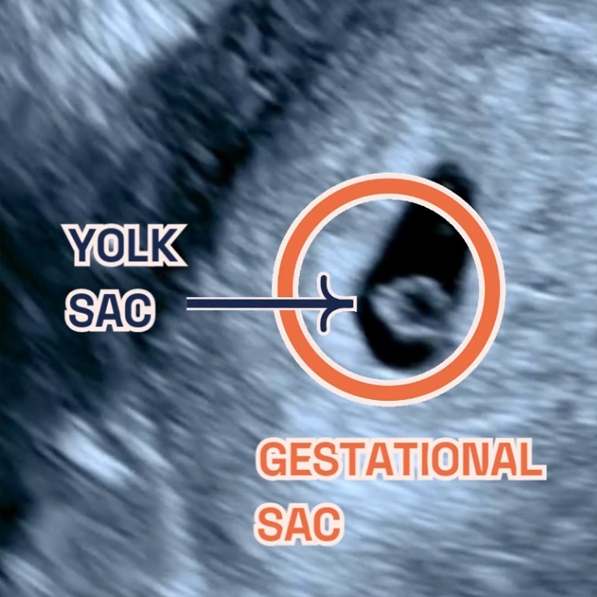
The gestational sac continues to house and protect your developing baby and its increased size from the previous week is a positive indication of ongoing growth and development. Moreover, the yolk sac will still be visible and may have increased in size, mirroring the embryo’s growth. It continues to perform its vital role until the placenta is ready to take over.

One of the most significant and emotional moments that happens when you are doing the 6 weeks pregnant ultrasound is the detection of the heartbeat. Unlike Week 5, where the embryo and its heartbeat are usually not yet visible, the viability scan often provides the first visual confirmation of the baby’s heartbeat. This is seen as a rhythmic flickering on the ultrasound screen.

In addition to the heartbeat, you might also start to see the fetal pole, which represents the early development of your baby. The fetal pole often referred to interchangeably with “embryo” in early pregnancy. Visible as a small structure near the yolk sac during an ultrasound, the fetal pole’s presence and size provide important information about the pregnancy’s progress.

  • Image showing what would an ultrasound show at 5 weeks of pregnancy. It shows an Ultrasound image by London Pregnancy Clinic that shows the gestational sac and the newly developed yolk sac - for educational purpose.

    Gestational sac and yolk sac at 5 weeks of pregnancy as seen on ultrasound scan.

  • Image showing what would an ultrasound show at 6 weeks of pregnancy. You can see the fetal pole, gestational sac and yolk sac. It shows an Ultrasound image by London Pregnancy Clinic that shows the gestational sac and how small it is - for educational purpose.

    Gestational sac, fetal pole and yolk sac at 6 weeks of pregnancy as seen on ultrasound scan.

Thinking ahead: Week 7?

Looking ahead to Week 7, anticipate more pronounced development in your baby’s structure and form. This week, the embryo continues to grow and refine its features, including the brain and facial characteristics. Your body will also adapt further to pregnancy, with symptoms evolving and deepening. As you prepare for this next stage, consider discussing upcoming screenings (we offer free counselling during our Viability Scan for NIPT) and nutritional adjustments with your healthcare provider to support this critical growth phase.

Week 6 of Pregnancy FAQs


  • Is no heartbeat at 6 weeks normal?

    At 6 weeks, not detecting a heartbeat can be quite common, often due to the limitations of ultrasound technology. At London Pregnancy Clinic, we utilise the latest technology to enhance detection rates. Sometimes, a lack of heartbeat might simply indicate an early scan, possibly within the 5th week of pregnancy rather than the 6th. Early pregnancy ultrasounds might not be sensitive enough to pick up the heartbeat of a very small embryo. In such early stages, a transvaginal ultrasound, being more sensitive than a transabdominal one, is usually preferred. Typically, cardiac tissue begins to pulse at around 5–6 weeks of pregnancy, appearing as a heartbeat on the ultrasound, even though the heart itself is not fully formed.

  • Why is there bleeding at 6 weeks of pregnancy?

    Experiencing light bleeding or ‘spotting’ at 6 weeks of pregnancy can be quite normal. This is often just implantation bleeding, occurring as the embryo embeds itself in the womb lining, typically around the time your period would have been due. Changes to the cervix due to pregnancy hormones might also lead to light bleeding, particularly after intercourse.

    However, it’s crucial to distinguish between harmless spotting and more severe conditions like miscarriage or ectopic pregnancy, which require immediate medical attention. If you’re experiencing severe symptoms, contact your nearest A&E. Remember, while light spotting can be part of a normal pregnancy, always consult with your healthcare provider for any concerns.

  • At 6 weeks pregnant where is the baby located?

    During week 6 of pregnancy, an ultrasound scan will typically show the gestational sac, yolk sac, fetal pole, and perhaps the heartbeat – these will all be part of your 6 week scan photos. Physically, your 6-week pregnant bump might not be noticeable to others, but you might start feeling some changes like cramping and bloating, making your belly feel a bit larger.

  • What does 6 weeks pregnant look like?

    Your little one is in the early stages of development, assuming the classic fetal position, curled up with leg buds folded inward. Looking somewhat like a tiny tadpole, complete with a small tail, the fetus is nestled securely in the uterus, not ready to move any time soon.

  • What to do when you’re 6 weeks pregnant?

    When you’re 6 weeks pregnant, focus on nutrition that’s rich in calcium, iron, and folate. Include foods like dairy, dark leafy greens, fortified cereals, and beans in your diet. Steer clear of potential hazards like raw meats, deli meats, raw seafood, and raw eggs. If you’re experiencing light bleeding or discomfort, consider booking a viability scan from around 6 weeks to check for any issues and confirm the ongoing health of your pregnancy. The ideal time for this scan is at 7 weeks, but earlier scans might be necessary for some women to ensure everything is progressing as it should.


Conclusion

As you prepare for your first private early pregnancy ultrasound, remember that seeing your baby’s heartbeat for the first time is a special milestone — one of many you’ll experience in your journey through pregnancy. It’s a time of celebration and joy, as well as a reminder of the incredible journey that lies ahead. To calculate when the best time for your scan use our pregnancy calculator.

Stay tuned on what your baby’s week-by-week growth will look like on our blog.


Latest Stories

Continue reading

  • 1
  • 2