
Transverse deficiency
The limb develops normally to a certain point and then is absent beyond it — for example an arm that ends at the wrist with an absent hand. This is the most common pattern.
Limb reduction defects — sometimes described as the absence of arms, hands, legs or feet — are conditions in which part or all of a limb does not form during early development. They affect around 1 in 2,000 babies and can often be seen on ultrasound, sometimes from the first trimester.
Limb differences can occur on their own or as part of another condition — see also amniotic band syndrome and limb-body-wall complex, a related cause of limb differences.
A limb reduction defect — also called a limb deficiency or limb difference — occurs when an arm or leg, or part of one, does not develop fully in the womb. The range is wide: some babies are missing a hand or foot, some part of an arm or leg, and in rare cases a whole limb.
Complete absence of a limb is called amelia, while partial absence — for example a shortened forearm or an absent hand — is called meromelia. Most limb differences affect only one side of the body, and the arms tend to be affected somewhat more often than the legs. Many children with a limb difference grow up healthy and independent, particularly when the difference is not linked to any other condition.
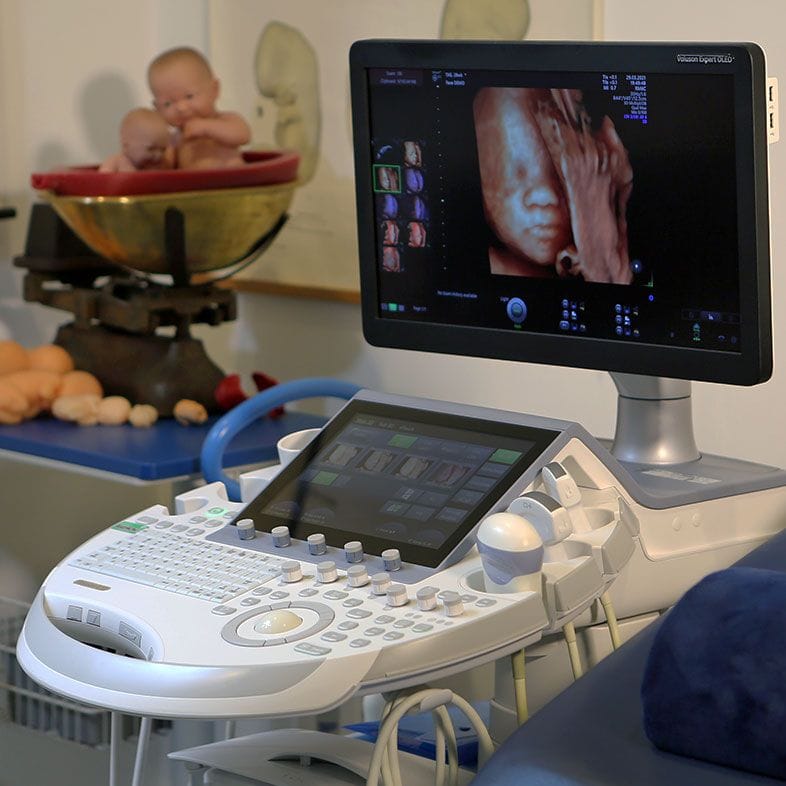
Ultrasound is the main way limb differences are found before birth. The arms, legs, hands and feet are examined as part of a structured scan, and many differences can be seen from the first trimester or early fetal scan onward, with further detail at the 20-week anomaly scan.
Not every limb difference is visible before birth — a proportion are only identified after delivery — but a careful early scan gives the best chance of early information and, where needed, referral to specialist teams. In most babies the cause is not known and the difference happens as a one-off event; a minority are linked to amniotic band sequence, to a disruption of the limb's blood supply, to certain medicines or to a wider genetic syndrome.
At London Pregnancy Clinic our early scans are performed by fetal medicine specialists who assess the baby's limbs as part of a structured examination. If a limb difference is suspected, we can arrange a detailed follow-up scan to define exactly which part of the limb is affected and to look for any associated features.
Where a difference is confirmed, we can discuss what it may mean, arrange genetic testing or referral where appropriate, and help you connect with the specialist teams and support organisations who care for children with limb differences. Our Fetal Medicine and Obstetrics consultant, Ms Diane Nzelu, is available for consultations to talk through the findings and your options.

Limb differences are described by which part of the limb is affected and how. The main patterns are:
The limb develops normally to a certain point and then is absent beyond it — for example an arm that ends at the wrist with an absent hand. This is the most common pattern.
A specific bone along the length of the limb is absent or underdeveloped, such as the radius in the forearm (radial) or the fibula in the lower leg (fibular), which can affect the limb's shape and position.
The complete absence of a limb. This is rare and, when present, prompts careful assessment for any associated conditions.
The partial absence of a limb — for example a shortened arm or leg, or an absent hand or foot with the rest of the limb present.
Strands from the amniotic sac wrap around a developing limb and restrict its growth, which can cause constriction rings or absence of part of a limb. See our page on amniotic band syndrome.
In many babies the limb difference occurs on its own, with no other problem — and here children very often grow up healthy and independent.
Limb reduction defects — also called limb deficiencies or limb differences — are conditions present at birth in which an arm or leg, or part of one, has not formed fully during development in the womb. They range from a missing finger, hand or foot, through a shortened or partially formed arm or leg, to the rare complete absence of a limb.
Limb reduction defects affect around 1 in 2,000 babies. Most affect a single limb, and in most cases the exact cause is not known.
Amelia means the complete absence of a limb, while meromelia means the partial absence of a limb — for example a shortened forearm, or an arm that ends at the wrist with an absent hand. Meromelia is far more common than amelia.
Doctors also describe limb differences as 'transverse' (the limb ends part-way, with the part beyond it absent) or 'longitudinal' (a particular bone along the limb is missing or underdeveloped). These descriptions help specialists plan care and any treatment.
In most babies the cause of a limb reduction defect is not known, and it occurs as a one-off (sporadic) event rather than something a parent has done or could have prevented. Some limb differences are linked to a disruption of the blood supply to the developing limb, or to amniotic band sequence, where strands of the amniotic sac wrap around a limb.
Recognised risk factors include certain medicines taken during pregnancy and smoking, and a minority of limb differences form part of a wider genetic syndrome. Taking a pregnancy multivitamin before conception may help lower the overall risk of birth differences.
Yes — ultrasound is the main way limb differences are identified before birth. The baby's arms, legs, hands and feet are examined as part of a structured scan, and many differences can be seen from the first trimester or early fetal scan, with more detail available at the 20-week anomaly scan.
It is important to know that not every limb difference is visible before birth; some are only found after delivery. A careful, specialist early scan gives the best chance of identifying a difference and arranging any further assessment.
Many limb differences occur on their own, with no other problem. However, some are associated with other birth differences or form part of a genetic syndrome, and some result from amniotic band sequence.
When a limb difference is found, specialists will usually carry out a detailed scan and may offer genetic testing to check whether it is isolated or part of a wider pattern. This information helps guide care and gives parents a clearer picture of what to expect.
Most children with a limb difference — particularly when it is isolated — grow up to lead full, active and independent lives. Children are remarkably adaptable, and a great deal of support is available, from physiotherapy and occupational therapy to prosthetics and specialist limb-difference services.
UK charities such as Reach and LimbPower support children and families with limb differences from birth onward, helping with practical advice, community, sport and confidence. Your care team can connect you with the right services for your child.
These UK organisations provide trusted information and support for families of a child with a limb difference.
A UK charity supporting children and young people with an upper limb difference, and their families, from birth through to adulthood — with local branches, community and practical guidance.
A UK charity that helps children and adults with limb differences and amputees get active, offering sport, exercise, family events and resources to rebuild confidence and wellbeing.
A UK charity offering non-directive information and support to parents through antenatal screening and diagnosis, including when a difference is found on a scan.
Contact
The figures and clinical statements on this page are drawn from the sources below. Guidance evolves — always discuss your individual circumstances with a clinician.
Cookies on this site
We use cookies needed to run this site. With your permission we would also use analytics and advertising cookies to see how the site is used and which of our adverts lead to bookings. Declining will not affect your care or your booking. See our Privacy notice and Terms & Conditions.