
NIPTIFY Test
NIPTIFY is an advanced NIPT offering the most expanded chromosomal and microdeletion screening currently available, covering complete and partial chromosome changes involving chromosomes 21, 18 and 13, sex chromosome conditions, 20 clinically relevant microdeletion syndromes as well as genome-wide detection of microdeletions and microduplications larger than 1 Mb
Available atLPC City (E1)LPC West (SW10)
NIPTIFY NIPT: Advanced Screening for Fetal Microdeletions
NIPTIFY is one of the most extensive genome-wide NIPT tests, powered by state-of-the-art genomic technology and positioned as a strong alternative to Panorama Microdeletions and PrenatalSafe Karyo Plus.
It offers the most expanded microdeletion screening currently available, including clinically relevant microdeletion syndromes, genome-wide detection of microdeletions and microduplications larger than 1 Mb, and detection of partial monosomy or trisomy 21, 18, and 13. Its proprietary fetal fraction enrichment technology helps minimise no-call results.
NIPTIFY is an advanced screening test based on complex genetic technology. For more detailed information, please see the FAQ session below.
Why Choose NIPTify NIPT Testing at London Pregnancy Clinic
- Broadest chromosomal and microdeletions coverage – NIPTIFY utilise genome-wide and targeted screening
- Expert fetal medicine specialists – comprehensive pre-NIPT counselling and ultrasound expertise included
- Very low no-call results rate – less than 1%
- Option of pre-test NIPT counselling with our genetic counsellor
- Competitive pricing – NIPTIFY NIPT from £690 with optional advanced screening packages available
- Complete prenatal care centre: London Pregnancy Clinic offers integrated NIPT testing with expert ultrasound scanning services
- 5* Rated Pregnancy Clinic – expert care and support throughout your prenatal screening journey
NIPTify NIPT Testing Combined with Early Pregnancy Scans
NIPTIFY NIPT testing is designed for patients who want a more advanced and comprehensive non-invasive assessment of fetal chromosomal health than standard NIPT.
While standard NIPT mainly screens for Down syndrome, Edwards syndrome and Patau syndrome, NIPTIFY offers extended screening for clinically significant copy number variants, including microdeletions, microduplications and other chromosomal gains or losses.
It includes a targeted panel of recurrent clinically relevant microdeletion syndromes, genome-wide screening for microdeletions and microduplications larger than 1 Mb, and assessment of partial chromosome changes involving chromosomes 21, 18 and 13.
This makes NIPTIFY one of the most comprehensive screening options currently available for patients concerned about fetal microdeletions.

NIPTIFY combined with an early pregnancy scan
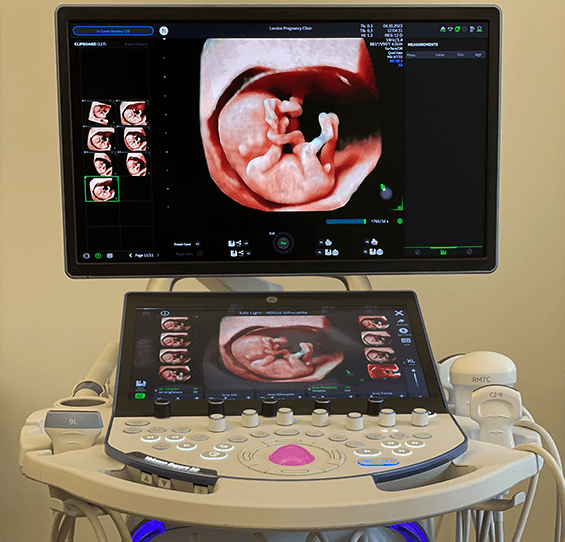
At London Pregnancy Clinic, we recommend performing NIPTIFY from 10 weeks of pregnancy, ideally together with our expert early pregnancy ultrasound scan. This approach allows us to combine advanced genetic screening from a maternal blood sample with a detailed early structural assessment of the baby.
- The ultrasound can identify major early fetal abnormalities, while NIPTIFY provides broader information about chromosomal conditions that may not be assessed by standard NIPT.
- NIPTIFY also uses fetal fraction enrichment technology, which may reduce the chance of failed or inconclusive results.
- Results are usually available within 5–10 working days after the sample reaches the laboratory.
- Optional pre-test counselling with our genetic counsellor is available for patients who would like help choosing between NIPTIFY, standard NIPT, SMART Test® KNOVA or diagnostic testing.
How the appointment works
The NIPTify NIPT testing procedure is straightforward and requires only a simple blood draw, similar to routine pregnancy blood tests. No special preparation is needed before your appointment, and the test can be performed at any time of day. Our trained phlebotomists will collect one tube of blood from your arm, which contains sufficient maternal blood for fetal DNA analysis. The entire collection process takes just a few minutes and is considered very safe for both mother and baby; because it is a simple blood draw, it does not carry the procedure-related miscarriage risk of invasive testing.
At London Pregnancy Clinic, NIPTify NIPT testing is often combined with your 10-week pregnancy scan appointment for convenience and comprehensive early pregnancy assessment. After blood collection, your sample is sent to our partner laboratory where advanced genetic analysis techniques isolate and analyse fetal DNA fragments.
The laboratory uses sophisticated sequencing technology to count chromosomal material and identify any imbalances indicative of trisomy conditions. You can continue with normal activities immediately after the blood draw, and we will contact you as soon as results are available, typically within 5–10 working days of sample collection.
Comparison
Your NIPT options
Compare our most popular NIPT options side by side. NIPTIFY offers the broadest chromosomal and microdeletion coverage currently available.
| Feature | PrenatalSafe | Panorama AI | NIPTIFY |
|---|---|---|---|
| Package | Basic | Basic Extended | Most Advanced NIPT — Comprehensive |
| As early as… | 10 weeks | 9 weeks | 10 weeks |
| Turnaround (working days) | 2-5 | 7-10 | 5-10 |
| Lab Location | UK | US | EE |
| No Call Results / Redraw Rates | 0.5-2% | 1-3% | ~0.03% |
| Down, Edwards & Patau Syndrome | ✔ | ✔ | ✔ |
| Di George Syndrome (22q Del) | – | ✔ | ✔ |
| Triploidy | – | ✔ | – |
| Turner Syndrome (45X) | – | ✔ | ✔ |
| Sex Chromosome Aneuploidies | – | ✔ | ✔ |
| Additional Chromosomes | – | – | ✔ |
| Microdeletions | – | 1 | 20+ |
| Genome-wide CNVs (>1 Mb) | – | – | ✔ |
| De Novo Genetic Syndromes | – | – | ✔ |
| Mutations in Mitochondrial DNA | – | – | ✔ |
| Twin Pregnancies | ✔ | Without 22q del | – |
| Vanishing Twin Syndrome | ✔ | – | ✔ |
| Donor Eggs / Surrogacy | ✔ | Without 22q del | ✔ |
| Fetal Sex Reveal (Optional) | ✔ | ✔ | ✔ |
| Scan & NIPT Price | £540 | £590 | £690 |
All NIPT options are screening tests, not diagnostic tests. A high-probability result should be confirmed with diagnostic testing.
Not sure which NIPT is right for you?
Speak to our genetic counsellor for pre-test counselling and help choosing between NIPTIFY, standard NIPT, SMART Test® KNOVA or diagnostic testing.
Accuracy and the conditions screened
What is NIPTIFY NIPT, and how accurate is it for detecting microdeletions?
NIPTIFY is an advanced non-invasive prenatal screening test that analyses fetal DNA fragments circulating in the mother’s blood. It screens for common chromosomal conditions such as Down syndrome, Edwards syndrome and Patau syndrome, but its main advantage is much broader screening for clinically important chromosomal copy number variants, often called “microdeletions”.
For microdeletions and microduplications, NIPTIFY is one of the most comprehensive non-invasive screening options currently available. Unlike older targeted microdeletion NIPT tests, which usually look for only a small number of selected syndromes, NIPTIFY provides broader coverage, including:
This means that NIPTIFY can screen for many clinically important chromosomal changes that would not be assessed by standard NIPT or by older limited microdeletion panels.
In terms of performance, NIPTIFY is designed to improve detection of small chromosomal deletions and duplications by using fetal fraction enrichment technology. This increases the proportion of fetal DNA available for analysis, which may improve sensitivity and reduce the chance of a failed or “no-call” result. NIPTIFY reports that its Focus Plus technology analyses approximately 3.6 times more fetal-origin DNA than regular NIPT, and clinical-cohort validation data report reliable detection of clinically relevant CNVs down to 1 Mb, with a retest rate below 1% and a final no-call rate close to zero.
The accuracy is highest for larger CNVs and for well-defined recurrent microdeletion syndromes. Very small CNVs, low fetal fraction, placental mosaicism and maternal CNVs can still affect the result. Therefore, although NIPTIFY offers very broad and high-resolution screening, it remains a screening test, not a diagnostic test.
A low-risk NIPTIFY result is reassuring and significantly reduces the chance of the chromosomal conditions included in the test. However, it cannot exclude every possible genetic condition. A high-risk result does not mean that the baby definitely has the condition and should usually be confirmed with diagnostic testing, such as CVS or amniocentesis with chromosomal microarray analysis.
In practical terms, NIPTIFY is currently one of the strongest available non-invasive screening options for fetal microdeletions and microduplications because it combines broad coverage, genome-wide CNV detection above 1 Mb, fetal fraction enrichment and a very low expected no-call rate. Its main limitation is that, like all NIPT tests, it cannot replace diagnostic testing and does not screen for most single-gene conditions.
- 20 recurrent clinically relevant microdeletion syndromes;
- genome-wide screening for microdeletions and microduplications larger than 1 Mb;
- detection of partial monosomy or trisomy involving chromosomes 21, 18 and 13.
Which conditions does NIPTIFY screen for?
NIPTIFY is an extended NIPT panel that screens for common chromosomal conditions, selected sex chromosome conditions, clinically important microdeletions and microduplications, and selected mitochondrial DNA variants.
NIPTIFY screens for the following main groups of conditions:
Common chromosomal conditions
Other whole-chromosome changes
NIPTIFY can also assess for trisomy or monosomy involving autosomal chromosomes other than chromosomes 13, 18 and 21. These are rarer chromosome conditions and are not usually included in standard NIPT.
Sex chromosome aneuploidies
NIPTIFY can screen for sex chromosome differences, including:
Partial chromosome changes involving chromosomes 13, 18 and 21
NIPTIFY can screen for segmental aneuploidies involving chromosomes 13, 18 and 21. This means that part of the chromosome may be missing or present as an extra copy, rather than the whole chromosome being affected.
Genome-wide microdeletions and microduplications
NIPTIFY performs genome-wide screening for copy number variants, including microdeletions and microduplications larger than 1 Mb.
This means it can look across the genome for clinically significant missing or extra chromosome segments, not only for a small targeted panel of named syndromes.
Targeted clinically relevant microdeletion and microduplication syndromes
NIPTIFY also screens for a panel of clinically relevant recurrent microdeletion and microduplication syndromes, including:
Selected mitochondrial DNA variants
NIPTIFY also includes analysis of selected mitochondrial DNA point mutations. Some mitochondrial DNA variants, such as 1095T>C, 1494C>T and 1555A>G, may be associated with a higher risk of hearing loss if the patient is treated with aminoglycoside antibiotics. If one of these variants is found, alternative antibiotics may be considered.
It is important to understand that NIPTIFY is a screening test, not a diagnostic test. A low-risk result is reassuring, but it cannot exclude all genetic conditions. A high-probability result should be reviewed by a specialist and may require confirmatory diagnostic testing.
- Trisomy 21, also known as Down syndrome
- Trisomy 18, also known as Edwards syndrome
- Trisomy 13, also known as Patau syndrome
- Monosomy X, also known as Turner syndrome
- 22q11.2 microdeletion, also known as DiGeorge syndrome
- Klinefelter syndrome, XXY
- Jacobs syndrome, XYY
- Triple X syndrome, XXX
- Turner syndrome, monosomy X
- Prader–Willi syndrome / Angelman syndrome
- Williams–Beuren syndrome
- 1p36 deletion syndrome
- Cri-du-chat syndrome
- Wolf–Hirschhorn syndrome
- Jacobsen syndrome
- Langer–Giedion syndrome
- Duchenne muscular dystrophy caused by a detectable deletion
- Smith–Magenis syndrome
- 15q11-q13 duplication syndrome
- Neurofibromatosis type 1 caused by a detectable deletion
- Koolen–de Vries syndrome
- Phelan–McDermid syndrome
- Miller–Dieker syndrome
- Pallister–Killian syndrome
- 3q29 deletion syndrome
- 2q31.2 deletion syndrome
- 15q24 deletion syndrome
- 17q12 deletion syndrome
- 7q11.23 duplication syndrome
How reliable are NIPTIFY results for different chromosomal conditions?
The reliability of NIPTIFY depends on the type of condition being screened for. Like all NIPT tests, NIPTIFY is a screening test, not a diagnostic test. This means it gives a low-probability or high-probability result, but high-probability results usually need confirmation with CVS or amniocentesis and chromosomal microarray.
Two important measures are PPV and NPV.
PPV, or positive predictive value, means how likely it is that a high-probability result is a true positive.
NPV, or negative predictive value, means how likely it is that a low-probability result is a true negative.
In the laboratory's reported NIPTIFY validation data, low-probability results were highly reassuring, with NPV reported as close to 100% for common trisomies, sex chromosome aneuploidies and rare autosomal aneuploidies, and >99% for CNVs.
The PPV was more variable:
This variation is expected in prenatal screening. Conditions such as microdeletions, microduplications and rare chromosomal abnormalities are uncommon, so even an advanced screening test may have a lower PPV for these findings. In simple terms, a high-probability result for a rare condition is more likely to need confirmation because false-positive results can occur.
The key message is that a low-probability NIPTIFY result is very reassuring, especially for the conditions included in the test. However, a high-probability result should not be considered diagnostic. The result should be reviewed by a specialist and, where appropriate, confirmed with diagnostic testing.
- Down syndrome, trisomy 21: PPV ~ 96%
- Edwards syndrome, trisomy 18: PPV ~ 89%
- Patau syndrome, trisomy 13: PPV ~ 44%
- Sex chromosome aneuploidies: PPV ~ 62%
- CNVs, including microdeletions and microduplications: PPV ~ 48%
- Rare autosomal aneuploidies: PPV ~ 18%
Which microdeletion and microduplication syndromes does NIPTIFY screen for?
NIPTIFY screens for a broad panel of clinically relevant chromosomal copy number conditions, often generally called “microdeletions”. More precisely, this includes both microdeletion syndromes, where a chromosome segment is missing, and microduplication syndromes, where there is an extra copy of a chromosome segment.
The targeted NIPTIFY panel includes 20 syndromes:
DiGeorge syndrome, also known as 22q11.2 deletion syndrome; Williams-Beuren syndrome; 1p36 deletion syndrome; Angelman syndrome; Prader-Willi syndrome; Wolf-Hirschhorn syndrome; Jacobsen syndrome; Cri-du-chat syndrome; Langer-Giedion syndrome; 15q11-q13 duplication syndrome; 7q11.
23 duplication syndrome; Duchenne muscular dystrophy caused by a detectable deletion; 17q12 deletion syndrome; Smith-Magenis syndrome; Koolen-De Vries syndrome; Phelan-McDermid syndrome; 15q24 deletion syndrome; neurofibromatosis type 1 caused by a detectable deletion; 3q29 deletion syndrome; 2q31.2 deletion syndrome; Miller-Dieker syndrome; and Pallister-Killian syndrome.
Some of these are classic microdeletion syndromes, while others are microduplication or broader copy-number syndromes. For conditions such as Duchenne muscular dystrophy and neurofibromatosis type 1, NIPTIFY can only detect the proportion of cases caused by a deletion, not all cases of these conditions.
In addition to this targeted panel, NIPTIFY also provides genome-wide screening for clinically significant microdeletions and microduplications larger than 1 Mb. This means the test is not limited only to the named syndromes above and may detect other clinically relevant chromosomal copy number changes.
As with all NIPT tests, NIPTIFY is a screening test, not a diagnostic test. A high-risk result should usually be confirmed with diagnostic testing, such as CVS or amniocentesis with chromosomal microarray
Which test can confirm fetal microdeletions?
The diagnostic test for fetal microdeletions and microduplications is usually chromosomal microarray analysis, also called CMA or array CGH, performed on a fetal sample.
The fetal sample is obtained through an invasive diagnostic procedure: chorionic villus sampling, or CVS, usually from around 11 weeks of pregnancy, or amniocentesis, usually from around 15 weeks. These tests analyse genetic material from the pregnancy and can confirm whether a clinically significant CNV is present.
NIPTIFY and other NIPT-based tests are screening tests. They can estimate the risk of certain CNVs, but they do not replace diagnostic testing. If a high-risk result is found, confirmation with CVS or amniocentesis and chromosomal microarray is usually recommended. Chromosomal microarray is specifically used to detect gains and losses of genetic material, including microdeletions and microduplications.
How accurate is NIPT for detecting fetal microdeletions and microduplications?
NIPT for microdeletions and microduplications is a screening test, not a diagnostic test. It can detect some clinically significant CNVs, but it is less accurate and less predictable than NIPT for common conditions such as Down syndrome.
The accuracy depends on several factors, including the size of the CNV, the chromosome region involved, the amount of fetal DNA in the mother’s blood, the laboratory method used, and whether there are ultrasound findings.
False-positive results can occur. This means the NIPT result suggests a microdeletion or microduplication, but the baby does not actually have it. Published studies show that the chance of a true positive result varies widely, from below 10% in some older studies to around 30–60% in some newer or higher-depth testing approaches. Because many microdeletion conditions are rare, even a technically good screening test can still produce false-positive results.
The positive predictive value, or PPV, of NIPTIFY for CNVs was approximately 48%. PPV means the chance that a high-probability screening result is confirmed as a true finding on diagnostic testing, such as CVS or amniocentesis with chromosomal microarray analysis.
In practical terms, a PPV of 48% means that when NIPTIFY reported a high probability for a CNV, the finding was confirmed in about half of cases. In the other half, the result was not confirmed and was therefore considered a false-positive screening result. This can also be explained as approximately a 1 in 2 chance that a high-probability CNV result is a true positive.
False-negative results can also occur. This means the NIPT result is low risk, but the baby still has a microdeletion or microduplication. Published studies have reported sensitivities of around 85–97% for some microdeletion screening approaches, meaning that some affected pregnancies may be missed. The real false-negative rate is difficult to measure because not all low-risk pregnancies have diagnostic genetic testing afterwards.
Therefore, a low-risk NIPT result is reassuring, but it cannot completely exclude all microdeletions or microduplications. A high-risk result should not be considered a diagnosis. It should usually be confirmed with diagnostic testing, such as CVS or amniocentesis followed by chromosomal microarray analysis.
For patients, the most important message is: NIPT can provide useful risk information, but positive results need confirmation and negative results do not rule out every possible CNV.
The numerical ranges above reflect published data showing wide variation in PPV and sensitivity across CNV NIPT studies, and professional guidance emphasises that positive cfDNA findings should be followed by genetic counselling and diagnostic testing.
Why is NIPT less accurate for microdeletions than for Down syndrome?
NIPT is very accurate for Down syndrome because Down syndrome is usually caused by a whole extra chromosome 21. This creates a relatively large and clear signal in the DNA fragments measured in the mother’s blood.
Microdeletions and microduplications are different. They usually involve much smaller missing or extra pieces of chromosomes, so the signal is much more subtle and harder to distinguish from normal biological variation or technical noise.
Another important reason is that microdeletion conditions are rare. When a condition is rare, even a very good screening test may have a lower chance that a positive result is truly positive. This means false-positive results are more common for microdeletion screening than for Down syndrome screening.
The accuracy can also be affected by the size of the CNV, the chromosome region involved, the amount of fetal DNA in the blood sample, placental mosaicism, and sometimes by CNVs present in the mother rather than the baby.
For this reason, NIPT for microdeletions should be understood as a screening test, not a diagnostic test. A low-risk result reduces the chance of a clinically significant CNV but cannot exclude all microdeletions or microduplications. A high-risk result should usually be confirmed by diagnostic testing, such as CVS or amniocentesis with chromosomal microarray analysis.
Professional guidance recognises cfDNA/NIPT as the most sensitive and specific screening test for common trisomies such as trisomy 21, but does not recommend routine general-population cfDNA screening for microdeletion conditions; limited validity data and rarity of these conditions are key reasons.
What does it mean if a microdeletion or microduplication is larger than 1 Mb?
“1 Mb” means one megabase, or approximately one million DNA letters. When a microdeletion or microduplication is described as larger than 1 Mb, it means that the missing or extra chromosome segment is larger than one million DNA letters.
A microdeletion larger than 1 Mb means that a relatively large section of genetic material is missing. A microduplication larger than 1 Mb means that there is an extra copy of a relatively large section of genetic material.
In general, larger CNVs are more likely to include important genes and therefore may be more likely to have clinical significance. However, size alone does not determine whether a CNV is harmful. The most important factors are where the CNV is located, which genes are involved, and whether that specific chromosome region is known to be associated with a medical condition.
For screening tests such as NIPTIFY, CNVs larger than 1 Mb are generally easier to detect than very small CNVs. However, NIPTIFY remains a screening test. If a clinically significant microdeletion or microduplication is suspected, confirmatory diagnostic testing, usually by CVS or amniocentesis with chromosomal microarray analysis, may be recommended.
What is the main limitation of NIPTIFY when screening for genetic conditions?
The main limitation of NIPTIFY is that it is designed to screen for chromosomal copy number changes, such as microdeletions, microduplications and partial chromosome gains or losses. It does not screen for single-gene, or monogenic, conditions.
This is important because many genetic syndromes are caused not by missing or extra chromosome segments, but by changes within a single gene. These single-gene conditions include many skeletal, cardiac, neurological, developmental and multiple-malformation syndromes.
Therefore, a low-risk NIPTIFY result does not exclude all genetic conditions. It reduces the chance of the chromosomal conditions included in the test, but it does not rule out monogenic disorders or all possible causes of fetal abnormalities.
For some pregnancies, especially when certain ultrasound findings suggest a possible single-gene condition, a different type of test may be more appropriate. In these situations, KNOVA NIPT may provide more relevant information because it is designed to assess selected monogenic conditions.
The choice between NIPTIFY, KNOVA NIPT and diagnostic testing depends on the clinical situation, ultrasound findings, gestational age and your preferences. Genetic counselling is recommended to choose the most appropriate test. You can book genetic counselling online via our booking system.
Understanding CNVs and microdeletions
What are CNVs, or copy number variants?
CNVs, or copy number variants, are changes in the amount of genetic material in a chromosome. Usually, we have two copies of most sections of our DNA, one from each parent. A CNV means that a section of DNA is either missing or present as an extra copy.
When a small section is missing, it is called a microdeletion. When there is an extra section, it is called a microduplication. In everyday language, these changes are often generally referred to as “microdeletions”, although medically this term only describes missing genetic material.
Some CNVs are harmless, while others may affect important genes and be linked with health problems, developmental delay, learning difficulties or structural differences. The possible impact depends on where the CNV is located, how large it is, and which genes are involved.
What are microdeletions?
A microdeletion is a small missing piece of a chromosome. This means that part of the baby’s genetic material is absent.
Microdeletions are one type of CNV, or copy number variant. Another type of CNV is a microduplication, where there is an extra copy of a small chromosome segment.
In everyday language, people often use the term “microdeletions” to refer to all small CNVs, including both microdeletions and microduplications. Medically, however, a microdeletion specifically means missing genetic material.
Some microdeletions can be linked with developmental delay, learning difficulties, structural abnormalities or other medical conditions. However, not all microdeletions cause health problems. The significance depends on where the missing piece is located, how large it is, and which genes are affected.
What are microduplications?
A microduplication is a small extra piece of a chromosome. This means that there is an additional copy of part of the baby’s genetic material.
Some microduplications can affect how genes work and may be associated with developmental or medical conditions. Others may have little or no effect. The significance depends on the exact chromosome region involved, its size, and the genes included.
How are CNVs, often called “microdeletions”, classified?
CNVs are usually classified according to how likely they are to affect health. This is called pathogenicity classification.
There are five main categories:
This classification is based on several factors, including where the CNV is located, its size, which genes are involved, whether similar changes have been reported before, and whether the CNV has been found in healthy people.
It is important to understand that the classification of a CNV does not always predict exactly how severely a baby may be affected. Some CNVs can have variable effects, even within the same family. If a clinically significant CNV is suspected, genetic counselling and confirmatory diagnostic testing may be recommended.
- Benign: the CNV is not expected to cause health problems.
- Likely benign: the CNV is unlikely to cause health problems, although the evidence may not be absolute.
- Variant of uncertain significance (VUS): there is not enough information to say clearly whether the CNV is harmful or harmless.
- Likely pathogenic: the CNV is likely to be associated with health or developmental problems.
- Pathogenic: the CNV is known to be associated with health or developmental problems.
How common are CNVs, often called “microdeletions”, in people?
CNVs are very common. Most people carry CNVs in their DNA, and the vast majority are harmless. Older population studies found that around 65–80% of people carry larger CNVs over 100 kb, while modern genetic testing shows that small benign CNVs are present in almost everyone.
Clinically significant CNVs are much less common. In the general population, pathogenic or likely pathogenic CNVs are found in roughly 0.5–1% of babies or pregnancies — approximately 1 in 100 to 1 in 200. In pregnancies where structural abnormalities are seen on ultrasound, the chance is higher, around 6%.
This means that CNVs themselves are a normal and common part of human genetic variation, but only a small proportion are expected to cause health or developmental problems. The significance depends on the exact location of the CNV, its size, whether it is a deletion or duplication, and which genes are involved.
Do CNVs have a biological role?
Yes. CNVs are not always abnormal. They are a natural part of human genetic variation and have played an important role in evolution and adaptation.
Because CNVs involve missing or extra copies of DNA segments, they can change how much of a gene product is made. In some cases, this may influence traits such as immune response, metabolism, fertility, brain development or adaptation to different environments.
Over long periods of time, some CNVs may have helped human populations adapt to infections, diet or environmental pressures. For example, extra copies of certain genes may sometimes give an advantage in specific conditions.
However, CNVs can also be neutral or harmful. Many CNVs have no known health effect, while others may disrupt important genes or disturb normal development. Whether a CNV is beneficial, harmless or clinically significant depends on where it is located, how large it is, and which genes are involved.
Is NIPTIFY right for you?
Who should consider NIPTIFY NIPT during pregnancy?
NIPTIFY is an extended NIPT panel that uses advanced genomic technology to provide broader non-invasive screening for fetal chromosomal copy number changes. It may be particularly suitable for three main groups of patients.
The first group includes patients who are particularly concerned about fetal microdeletions and microduplications and would like one of the broadest non-invasive screening options currently available for these chromosomal changes. Standard NIPT mainly screens for Down syndrome, Edwards syndrome and Patau syndrome, whereas NIPTIFY offers broader screening for clinically relevant CNVs, often referred to as “microdeletions”.
In the past, patients in this group often considered targeted tests such as the Panorama Microdeletions panel. NIPTIFY offers a more comprehensive option, as it screens for a wider range of clinically relevant microdeletion and microduplication syndromes and also provides genome-wide assessment for CNVs larger than 1 Mb.
For this group of patients, we recommend performing NIPTIFY from 10 weeks of pregnancy, ideally after our 10 Week Scan. This allows us first to assess early fetal development and screen for major structural abnormalities, and then to combine this information with one of the most extended non-invasive genetic screening options available.
The second group includes patients whose baby has structural findings or markers on ultrasound, but who do not wish to have invasive diagnostic testing, such as CVS or amniocentesis. In this situation, diagnostic testing with chromosomal microarray is usually the most informative test. However, if a patient does not want an invasive procedure, NIPTIFY may provide additional non-invasive information about the risk of chromosomal copy number changes.
The third group includes patients who have received “no-call” result from another NIPT provider.
A no-call result can happen for several reasons, but one common reason is a low fetal fraction, meaning that there was not enough fetal DNA in the mother’s blood sample for the laboratory to provide a reliable result. This can be stressful for patients, especially if the result remains inconclusive after a repeat blood sample.
NIPTIFY may be a useful option in this situation because it uses fetal fraction enrichment technology, which is designed to increase the proportion of fetal DNA available for analysis. This may reduce the chance of another no-call result and improve the likelihood of obtaining an informative screening result.
For patients with a previous no-call result, we recommend an individual review before testing, including gestational age, maternal factors, scan findings and the reason given for the failed result, where available.
It is important to understand that NIPTIFY is a screening test, not a diagnostic test. A low-risk result can be reassuring, but it cannot exclude all genetic conditions. A high-chance result should usually be confirmed with diagnostic testing.
NIPTIFY may be especially useful when the aim is to screen more broadly for fetal microdeletions, microduplications and partial chromosomal abnormalities, while avoiding the small procedure-related risks of invasive testing. However, the best test should always be chosen after discussion with a fetal medicine specialist or genetic counsellor, taking into account the ultrasound findings, gestational age and the patient’s preferences.
Can I have NIPTIFY if my Panorama NIPT result was “no-call”?
Yes. NIPTIFY may be considered if you have received a “no-call” result from Panorama or another NIPT provider.
A no-call result means that the laboratory was unable to provide a reliable result from the blood sample. This can happen for several reasons, but one common reason is a low fetal fraction, meaning that there was not enough fetal DNA in the mother’s blood sample for the test to analyse confidently.
In our clinical experience, Panorama has a no-call rate of approximately 2–3%. NIPTIFY appears to have a much lower no-call rate, partly because it uses fetal fraction enrichment technology, which is designed to increase the proportion of fetal DNA available for analysis.
In the laboratory's NIPTIFY validation data, repeat sampling was required in 100 out of 10,501 cases, or 0.95%, due to inconclusive findings, reduced fetal fraction, elevated standard deviation, vanishing twin suspicion or low sequencing read count. After repeat testing, only 3 samples remained non-reportable, giving a final no-call rate of 0.03%.
This means that many patients who receive a no-call result from another NIPT provider may still be able to obtain an informative result with NIPTIFY.
However, a previous no-call result should always be reviewed carefully. In some cases, a no-call result can be associated with technical factors, early gestational age, maternal factors or, rarely, fetal or placental chromosomal abnormalities.
We therefore recommend assessing the pregnancy with an ultrasound scan and reviewing the previous NIPT report before deciding whether NIPTIFY is the most appropriate next step.
My baby has an ultrasound finding and I have been offered an invasive test. Can I do NIPTIFY instead?
If a structural finding is seen on ultrasound, the most informative test is usually an invasive diagnostic test, such as CVS or amniocentesis, followed by chromosomal microarray analysis. This is because diagnostic testing analyses fetal genetic material directly and can confirm or exclude many chromosomal abnormalities with much greater certainty.
NIPTIFY can be considered if you do not wish to have invasive testing. It may provide useful additional non-invasive information, especially about clinically significant microdeletions, microduplications and other chromosomal copy number changes. In this situation, NIPTIFY may be a reasonable option for patients who want more information while avoiding the small procedure-related risk of CVS or amniocentesis.
However, it is very important to understand that NIPTIFY is not a replacement for diagnostic testing. A low-risk NIPTIFY result is reassuring, but it cannot exclude all possible genetic causes of an ultrasound finding. In particular, it does not rule out all chromosomal abnormalities, smaller CNVs below the test resolution, mosaicism or single-gene conditions.
A high-risk NIPTIFY result would also need confirmation with diagnostic testing.
Therefore, if an ultrasound abnormality has been identified, we recommend a comprehensive scan and detailed discussion with our fetal medicine specialist. The best option depends on the type of ultrasound finding, gestational age, your preferences, and whether you would consider invasive testing if the screening result is high risk.
Can I have genetic counselling before choosing NIPTIFY?
Yes. At London Pregnancy Clinic, patients who are unsure whether NIPTIFY is the right test for them can arrange pre-test counselling with our genetic counsellor.
This is especially helpful if you are choosing between different NIPT options, if your baby has an ultrasound finding, if you have had a previous high-risk or no-call NIPT result, or if you are concerned about microdeletions, microduplications or single-gene conditions.
During pre-test counselling, we can explain what NIPTIFY can and cannot detect, how it compares with other tests such as standard NIPT or SMART Test® KNOVA, and when diagnostic testing such as CVS or amniocentesis may be more appropriate.
There is always time to think about your options. Our aim is to help you make an informed decision that feels right for you and your pregnancy.
I am confused about which NIPT test is best for me. How do I choose?
It is completely understandable to feel confused, as there are now several different advanced NIPT options available. There is no single “best” NIPT test for every pregnancy. The most appropriate test depends on your individual situation, your scan findings, what conditions you wish to screen for, and how much information you feel comfortable receiving.
Standard NIPT is mainly designed to screen for Down syndrome, Edwards syndrome and Patau syndrome. NIPTIFY is a more extended option for patients who want broader screening for microdeletions, microduplications and other chromosomal copy number changes. Other tests, such as SMART Test® KNOVA, may be more suitable when there is concern about selected single-gene conditions.
If a standard NIPT is what suits you, our UK-analysed option is TDL VeriSeq V2, run by The Doctors Laboratory in London as the successor to the discontinued Harmony test. It screens for Down’s, Edwards’ and Patau’s syndromes with optional fetal sex, reporting in 2–4 working days at £540 with your scan — but it does not screen for the microdeletions and copy number changes that NIPTIFY covers.
At London Pregnancy Clinic, we do not expect patients to make this decision alone. If you are unsure which test is right for you, we recommend a detailed discussion with one of our clinicians or genetic counsellors before the blood test is performed. This allows us to review your ultrasound findings, pregnancy history, previous screening results and personal concerns.
During counselling, we can explain what each test can and cannot detect, the limitations of screening, the possibility of false-positive or false-negative results, and when diagnostic testing such as CVS or amniocentesis may be more appropriate.
There is always time to think and consider your options. Our role is to help you understand the choices clearly, so that you can make an informed decision that feels right for you.
Your appointment, results and comparisons
What happens during NIPTify NIPT testing at your clinic?
The NIPTify NIPT testing procedure is straightforward and requires only a simple blood draw, similar to routine pregnancy blood tests. No special preparation is needed before your appointment, and the test can be performed at any time of day. Our trained phlebotomists will collect one tube of blood from your arm, which contains sufficient maternal blood for fetal DNA analysis. The entire collection process takes just a few minutes and is considered very safe for both mother and baby; because it is a simple blood draw, it does not carry the procedure-related miscarriage risk of invasive testing.
At London Pregnancy Clinic, NIPTify NIPT testing is often combined with your 10-week pregnancy scan appointment for convenience and comprehensive early pregnancy assessment. After blood collection, your sample is sent to our partner laboratory where advanced genetic analysis techniques isolate and analyse fetal DNA fragments.
The laboratory uses sophisticated sequencing technology to count chromosomal material and identify any imbalances indicative of trisomy conditions. You can continue with normal activities immediately after the blood draw, and we will contact you as soon as results are available, typically within 5–10 working days of sample collection.
How long does it take to receive NIPTIFY results at London Pregnancy Clinic?
At London Pregnancy Clinic, NIPTIFY results are usually available within 5–10 working days after your blood sample reaches the laboratory.
In most cases, patients receive a clear result within this timeframe. NIPTIFY has a low redraw rate and a very low final no-call rate, meaning that repeat sampling is rarely required.
Occasionally, results may take longer if the laboratory needs to repeat or further review the analysis, or if the sample requires additional quality checks. If this happens, our team will keep you informed and advise you on the next steps.
Once the result is received, it is reviewed by our clinical team before being shared with you. A low-risk result is usually straightforward, while a high-risk or complex result will be discussed carefully and may require genetic counselling or confirmatory diagnostic testing.
What happens if my NIPTIFY result shows a high probability (high risk)?
A high-probability NIPTIFY result means that the test has detected an increased chance of a chromosomal condition, such as a microdeletion, microduplication or another copy number change. It does not mean that the baby definitely has the condition.
NIPTIFY is a screening test, not a diagnostic test. Therefore, any high-probability result should be reviewed carefully by a specialist and usually confirmed with diagnostic testing.
The next steps may include:
The most appropriate next step depends on the exact chromosome change reported, the gestational age, ultrasound findings and your preferences.
At London Pregnancy Clinic, high-probability or complex NIPTIFY results are discussed carefully with the patient. We explain the result, its possible significance, the chance of a true or false positive result, and the options for confirmatory testing.
- A detailed review of the NIPTIFY result;
- A specialist ultrasound target scan to look for any structural findings;
- Genetic counselling to explain what the result may mean;
- Confirmatory diagnostic testing, usually CVS or amniocentesis with chromosomal microarray analysis.
Will the NHS act on a high-probability NIPTIFY result?
It depends on what the high-probability result shows.
For common trisomies, Down syndrome, Edwards syndrome and Patau syndrome, there is an established NHS screening and diagnostic pathway. If a result suggests a high chance of trisomy 21, 18 or 13, the NHS will usually offer counselling and discuss confirmatory diagnostic testing, such as CVS or amniocentesis. NHS screening information specifically covers these three conditions and lists CVS or amniocentesis as options after a higher-chance screening result.
For other findings, such as microdeletions, microduplications, sex chromosome abnormalities, rare autosomal trisomies or partial chromosome changes, the situation is different. These conditions are generally outside the standard NHS fetal screening pathway. NHS NIPT is currently available through specific pathways for targeted aneuploidies, and is not designed as broad screening for all fetal genetic conditions.
This means that if NIPTIFY shows a high probability of a microdeletion or another rare chromosomal condition, the NHS may not automatically offer invasive diagnostic testing based on the private NIPT result alone. Some NHS fetal medicine units may review the case, especially if there are ultrasound findings, but others may advise that confirmatory testing should be arranged privately.
If NHS diagnostic testing is not offered, parents may need to consider private CVS or amniocentesis with chromosomal microarray analysis to confirm or exclude the finding.
At London Pregnancy Clinic, we help patients understand the result, assess whether NHS referral is appropriate, and discuss the option of private diagnostic testing if confirmation is required. A high-probability NIPTIFY result should always be treated as a screening result until confirmed by diagnostic testing.
How does NIPTIFY compare to other non-invasive prenatal screening tests (NIPT)?
NIPTIFY NIPT testing differs from other NIPT options through its specific laboratory methodology and performance characteristics, though all high-quality NIPT tests analyse cell-free fetal DNA in maternal blood for chromosomal screening. At London Pregnancy Clinic, we offer several NIPT options, including PrenatalSafe, Unity, Panorama, and the comprehensive and most advanced SMART TEST®-KNOVA, each with different coverage and capabilities.
NIPTify NIPT focuses on providing highly accurate screening for the three main trisomies with rapid turnaround times and low failure rates, making it an excellent choice for patients seeking reliable basic chromosomal screening.
The key advantages of NIPTify NIPT include its streamlined testing process, consistent performance across different pregnancy types including those with vanishing twin syndrome, and excellent laboratory quality control.
While some NIPT options offer expanded screening for microdeletions, sex chromosome abnormalities, or rare genetic conditions, NIPTify NIPT concentrates on delivering exceptional accuracy for the most common and clinically significant chromosomal conditions.
Our specialists can discuss which NIPT option best suits your individual needs, pregnancy circumstances, and screening preferences, ensuring you receive the most appropriate testing for your situation.
How does NIPTIFY compare with Panorama Microdeletions?
Both NIPTIFY and Panorama Microdeletions are non-invasive prenatal screening tests that can assess the risk of selected fetal microdeletions. However, they use different technologies and provide different levels of coverage.
Panorama Microdeletions is an earlier-generation targeted test based on SNP technology. It screens for a small number of selected microdeletion syndromes, traditionally including five specific conditions. Because it is targeted, it does not assess the whole genome for larger microdeletions or microduplications.
For the most common microdeletion syndrome, 22q11.2 deletion syndrome, published validation data for Panorama have shown more limited performance than NIPT for Down syndrome, with a positive predictive value of around 50% and a detection rate just above 80%. This means that false-positive and false-negative results can occur. In our own clinical experience, Panorama has also had a relatively high no-call rate, around 3%.
NIPTIFY is a newer and more comprehensive test. It uses advanced genetic technology and provides broader screening, including:
20 recurrent clinically relevant microdeletion syndromes;
genome-wide detection of microdeletions and microduplications larger than 1 Mb;
detection of partial monosomy or trisomy involving chromosomes 21, 18 and 13.
NIPTIFY also uses proprietary fetal fraction enrichment technology, which may reduce the chance of a no-call result, especially in samples with a lower fetal fraction.
The main advantage of NIPTIFY is broader coverage. It can look for more clinically relevant chromosomal changes than a targeted microdeletion panel. However, NIPTIFY is also newer and currently has less long-term published validation data than some older tests. For this reason, results should be interpreted carefully and in the context of ultrasound findings, medical history and genetic counselling.
It is important to understand that both Panorama Microdeletions and NIPTIFY are screening tests, not diagnostic tests. A high-risk result should usually be confirmed with diagnostic testing, such as CVS or amniocentesis with chromosomal microarray analysis. A low-risk result is reassuring, but it cannot completely exclude all microdeletions or microduplications.
How does NIPTIFY compare with PrenatalSafe Karyo Plus?
Both NIPTIFY and PrenatalSafe Karyo Plus are advanced non-invasive prenatal screening tests that go beyond standard NIPT for Down syndrome, Edwards syndrome and Patau syndrome. Both tests can screen for selected microdeletion syndromes and both offer genome-wide assessment for larger chromosomal changes. However, there are important differences in the level of detail and coverage.
PrenatalSafe Karyo Plus is a genome-wide NIPT test that screens for the common trisomies, sex chromosome abnormalities, selected whole-chromosome aneuploidies, and a panel of 9 microdeletion syndromes. It can also detect larger random, or non-recurrent, copy number variants across the genome.
However, the genome-wide CNV detection threshold for PrenatalSafe Karyo Plus is relatively large — approximately 7 Mb. This means that it is mainly designed to detect larger deletions and duplications. Many clinically important pathogenic CNVs are smaller than 7 Mb, so these smaller changes may not be detected by this approach.
NIPTIFY is a newer and more comprehensive test for fetal CNV screening. It provides broader coverage, including:
The main advantage of NIPTIFY is its higher-resolution genome-wide CNV screening. Because it can detect CNVs larger than 1 Mb, it may identify a wider range of clinically relevant microdeletions and microduplications than tests with a 7 Mb reporting threshold.
NIPTIFY also uses proprietary fetal fraction enrichment technology, which may help reduce the chance of a no-call result, particularly in samples with a lower fetal fraction.
However, it is important to be balanced. PrenatalSafe Karyo Plus is an established genome-wide NIPT option, while NIPTIFY is a newer test and currently has less long-term published validation data. Therefore, NIPTIFY offers broader and higher-resolution screening, but results should still be interpreted carefully in the context of ultrasound findings, medical history and genetic counselling.
Both PrenatalSafe Karyo Plus and NIPTIFY are screening tests, not diagnostic tests. A high-risk result should usually be confirmed by diagnostic testing, such as CVS or amniocentesis with chromosomal microarray analysis. A low-risk result is reassuring, but it cannot completely exclude all fetal microdeletions, microduplications or other chromosomal abnormalities.
- 20 recurrent clinically relevant microdeletion syndromes;
- genome-wide detection of microdeletions and microduplications larger than 1 Mb;
- detection of partial monosomy or trisomy involving chromosomes 21, 18 and 13.
How does NIPTIFY compare with SMART Test® KNOVA?
NIPTIFY and SMART Test® KNOVA are both advanced non-invasive prenatal screening tests, but they are designed to look for different types of genetic conditions.
NIPTIFY is mainly focused on chromosomal copy number changes. These include microdeletions, microduplications, larger CNVs, and partial chromosome gains or losses. It is particularly useful for patients who want extended non-invasive screening for fetal microdeletions and microduplications beyond standard NIPT.
SMART Test® KNOVA is a targeted screening test for selected severe genetic syndromes, many of which are caused by single-gene, or monogenic, conditions. These conditions are not detected by standard NIPT and are also not detected by routine chromosomal microarray, because they are caused by small changes within individual genes rather than missing or extra chromosome segments.
The KNOVA panel is carefully curated to focus on known, clinically important genetic syndromes. This targeted approach may reduce the chance of uncertain or false-positive findings compared with very broad genome-wide screening. For pregnancies where the concern is a severe monogenic syndrome, KNOVA may therefore provide more relevant information than NIPTIFY.
NIPTIFY has different strengths. It provides broader screening for chromosomal CNVs, including microdeletions and microduplications larger than 1 Mb across the genome. This means it may detect clinically relevant chromosomal changes that would not be assessed by KNOVA.
Because NIPTIFY screens more broadly for CNVs, it may also have a higher chance of detecting uncertain or false-positive findings compared with a more targeted, curated panel. This is why counselling before testing is important.
In practical terms, SMART Test® KNOVA may be the more suitable choice for many patients because it offers a broad and carefully balanced panel of selected severe genetic syndromes, including monogenic conditions that are not assessed by NIPTIFY. Its targeted and carefully curated approach may also reduce the chance of uncertain or false-positive findings.
However, NIPTIFY may be the more appropriate option when the main concern is chromosomal copy number changes, such as microdeletions, microduplications or other CNVs. NIPTIFY is specifically designed to provide extended screening for these types of chromosomal changes, including genome-wide CNV screening above 1 Mb.
For some patients, the two tests may be complementary rather than competing options. Patients who wish to have the most advanced non-invasive genetic screening may choose to consider both tests after counselling.
Both tests are screening tests, not diagnostic tests. A high-risk result from either test should be discussed with a specialist and may require confirmatory diagnostic testing.
How does NIPTIFY compare with diagnostic testing?
NIPTIFY and diagnostic testing are very different types of tests.
NIPTIFY is a non-invasive screening test. It is performed from a maternal blood sample and analyses fetal DNA fragments circulating in the mother’s blood. Its main advantage is that it does not involve putting a needle into the pregnancy, so there is no procedure-related miscarriage risk. NIPTIFY can provide broad screening for Down syndrome, Edwards syndrome, Patau syndrome, sex chromosome conditions, microdeletions, microduplications and other copy number variants.
Diagnostic testing, such as CVS or amniocentesis, involves taking a sample directly from the pregnancy. CVS is usually performed from around 11 weeks, and amniocentesis from around 15 weeks. This sample can then be analysed by chromosomal microarray, which is the diagnostic test usually used to confirm or exclude fetal microdeletions and microduplications.
The main advantage of diagnostic testing is certainty. It is much more accurate than NIPTIFY because it analyses pregnancy genetic material directly. The main disadvantage is that it is invasive and carries a small risk of procedure-related complications, including miscarriage or premature delivery.
In simple terms, NIPTIFY is safer and non-invasive, but it is a screening test. Diagnostic testing is more definitive, but it is invasive and carries a small risk.
NIPTIFY may be suitable for patients who want extended non-invasive screening and do not wish to have an invasive test at this stage. However, if there is a significant ultrasound abnormality, or if NIPTIFY shows a high-probability result, diagnostic testing with CVS or amniocentesis and chromosomal microarray is usually recommended.
I’m not based in London — can I just do the NIPT without a scan?
Not through London Pregnancy Clinic — every NIPT we offer includes an expert ultrasound scan. The scan confirms your pregnancy is viable, dates it accurately and checks it is suitable for testing, which is why we do not offer the blood test on its own.
If you cannot get to our London clinic, our partner Jeen Health offers NIPT across the UK, including NIPTIFY. You will need to provide proof of a pregnancy scan taken within the last 7 days before your blood sample is taken.
Contact
Do you want to know more about your options of NIPT?
Sources & clinical references
The figures and clinical statements on this page are drawn from the sources below. Guidance evolves — always discuss your individual circumstances with a clinician.
- RCOGNon-invasive Prenatal Testing for Chromosomal Abnormality using Maternal Plasma DNA (Scientific Impact Paper No. 15)2014
- RCOGAmniocentesis and Chorionic Villus Sampling (Green-top Guideline No. 8)2021
- Antenatal Results & Choices (ARC)Screening for Down's syndrome, Edwards' syndrome and Patau's syndrome2023
- PubMed Central (Taylor-Phillips et al., BMJ Open 2016)Accuracy of non-invasive prenatal testing using cell-free DNA for detection of Down, Edwards and Patau syndromes: a systematic review and meta-analysis (BMJ Open)2016
- Great Ormond Street Hospital (NHS)Non-invasive prenatal testing for Down's Syndrome is 99% accurate and is preferred by parents2017