
Potter sequence
The chain of features caused by having little or no amniotic fluid — underdeveloped lungs, characteristic flattened facial features, and limb positioning differences. Bilateral renal agenesis is the classic cause of this sequence.
Bilateral renal agenesis is a rare condition in which both of a baby's kidneys fail to form. It is one of the 11 physical conditions the NHS Fetal Anomaly Screening Programme looks for at the routine 20-week scan, but at London Pregnancy Clinic our fetal-medicine specialists can often raise suspicion of it earlier, through our detailed 10 Week Scan and Early Fetal Scan. We know this is one of the hardest things any expectant family can face, and we are here to support you with clarity and care at every step.
Bilateral Renal Agenesis is one of the 11 conditions the NHS screens for at the 20-week scan — see our FASP overview and how we aim to detect anomalies earlier.
Bilateral renal agenesis means that neither kidney has developed during the baby's growth in the womb. The kidneys normally filter waste from the blood and, crucially before birth, produce the urine that makes up most of the amniotic fluid surrounding the baby. When both kidneys are absent, no urine is made, so the fluid around the baby becomes very low or absent altogether (severe oligohydramnios or anhydramnios).
This lack of fluid has a knock-on effect that gives the condition its most serious feature. Amniotic fluid is essential for the baby's lungs to expand and mature, so when there is little or no fluid the lungs cannot develop properly (pulmonary hypoplasia). The combination of absent kidneys and underdeveloped lungs is the reason this condition is sadly, in almost all cases, not survivable. According to the NHS, babies with bilateral renal agenesis will be stillborn or die very soon after birth, and there is currently no treatment or cure.
Receiving this diagnosis is devastating, and there is no right or wrong way to feel. Nothing you did caused it. Our role is to make sure you understand what has been found, to confirm the findings carefully, and to connect you with specialist and emotional support so that you are never left to face this alone.
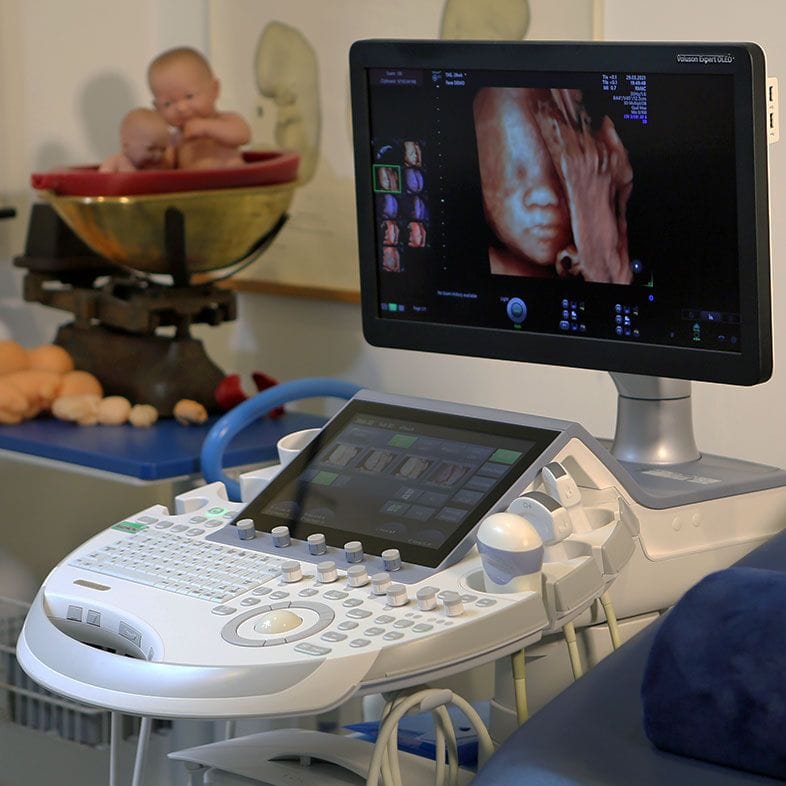
Bilateral renal agenesis is one of the 11 physical conditions the NHS Fetal Anomaly Screening Programme (FASP) specifically looks for at the routine 20-week scan (performed between 18+0 and 20+6 weeks).
On ultrasound it is recognised by a characteristic combination of findings: no kidneys seen in either renal fossa, an empty or absent fetal bladder, and very little or no amniotic fluid around the baby. Detection at the anomaly scan is high — a national cohort study in England reported an antenatal detection rate of 98.7% for bilateral renal agenesis.
If anything unusual is seen, you would be offered a confirmatory scan with a fetal-medicine specialist.
At London Pregnancy Clinic our angle is earlier and more comprehensive assessment. Our detailed 10 Week Scan and Early Fetal Scan are performed by fetal-medicine specialists who examine the kidneys, bladder and fluid volume in far greater depth than a routine dating scan.
In many cases this means suspicion of a serious renal problem can be raised well before 20 weeks — giving families more time to understand what is happening and to make decisions with proper support.
We are always honest about the limits of early imaging: the kidneys and bladder are small and still developing in the first trimester, so some findings can only be confirmed reliably a little later. Where we cannot yet be certain, we will tell you clearly and arrange careful follow-up rather than offer false reassurance or premature alarm.
The chain of features caused by having little or no amniotic fluid — underdeveloped lungs, characteristic flattened facial features, and limb positioning differences. Bilateral renal agenesis is the classic cause of this sequence.
Because no urine is produced, the fluid around the baby is very low or absent. This is often the first thing that draws attention on a scan and is central to why the condition affects the lungs.
Underdevelopment of the lungs due to the lack of fluid needed for them to expand and mature. This is the feature that makes the condition, sadly, not survivable in almost all cases.
A recognisable pattern of facial features described in affected babies, including a flattened nose, recessed chin, low-set ears and prominent skin folds around the eyes, caused by pressure in a womb with little fluid.
Bilateral renal agenesis can occur alongside heart, limb, spine or genital differences. StatPearls notes associated abnormalities in a substantial proportion of cases, which is one reason a detailed specialist scan is important.
Most cases are isolated, but bilateral renal agenesis can sometimes be part of a wider genetic syndrome. It is genetically varied, so a specialist team may discuss genetic testing (such as amniocentesis) to look for an underlying cause.
It is a rare condition where both of the baby's kidneys fail to develop in the womb. Because the kidneys normally produce the urine that makes up most of the amniotic fluid, no fluid is made, and this in turn prevents the lungs from developing properly.
The kidneys and lungs are both affected. Without kidneys the baby cannot survive after birth, and without amniotic fluid the lungs cannot mature. The NHS explains that babies with bilateral renal agenesis will be stillborn or die very soon after birth, and there is currently no cure or treatment. We are deeply sorry that this is the reality of the condition, and we will support you fully whatever you decide.
No. Bilateral renal agenesis is a problem with how the kidneys formed very early in development. It is not caused by anything you did, ate, or avoided during pregnancy, and there is nothing you could have done to prevent it.
On ultrasound it shows as an absence of both kidneys, an empty or absent bladder, and very little or no fluid around the baby. It is one of the 11 conditions the NHS 20-week anomaly scan specifically looks for, and detection at that scan is very high.
At London Pregnancy Clinic, our detailed early scans with fetal-medicine specialists can often raise suspicion earlier than 20 weeks, though some findings can only be confirmed reliably a little later in pregnancy.
Often, yes. Our 10 Week Scan and Early Fetal Scan look carefully at the kidneys, bladder and fluid volume, so concerns can frequently be raised earlier than the routine 20-week scan. We are always honest about the limits of early imaging — the kidneys are small and still developing in the first trimester — so where we cannot be certain yet, we will tell you clearly and arrange close follow-up rather than give false reassurance.
Yes. If a serious renal problem is suspected, you would be offered a detailed confirmatory scan with a fetal-medicine specialist. Further tests, such as amniocentesis, may be offered to look for an underlying genetic cause, which can be helpful information for you and for any future pregnancies. Everything is your choice, and our team will talk you through what each test can and cannot tell you.
You do not have to face this alone. Antenatal Results and Choices (ARC) offers confidential, non-judgemental support to parents making decisions before, during and after antenatal testing. Sands supports anyone affected by the loss of a baby. Our own team is here for you throughout, and we can help connect you with a fetal-medicine service and the right emotional support for your family.
These organisations provide trusted information and support relating to bilateral renal agenesis.
The UK's national charity offering non-directive, confidential support to parents before, during and after antenatal screening and diagnosis, including help with difficult decisions and bereavement. Helpline 020 7713 7486, Monday to Friday.
Sands offers a safe space and dedicated bereavement support for anyone affected by pregnancy loss or the death of a baby, including a free helpline, befriending and local support groups. Helpline 0808 164 3332.
A leading UK kidney charity providing information, specialist counselling and practical support for families affected by kidney conditions. Support line 0808 801 00 00.
Contact
The figures and clinical statements on this page are drawn from the sources below. Guidance evolves — always discuss your individual circumstances with a clinician.
Cookies on this site
We use cookies needed to run this site. With your permission we would also use analytics and advertising cookies to see how the site is used and which of our adverts lead to bookings. Declining will not affect your care or your booking. See our Privacy notice and Terms & Conditions.